Photo by Nichitean Dumitrita Veronica on Pexels.com
Close on the heels of World Goth Day comes World Dracula Day. It
might be sunny springtime where you live, but this is the week to ignore
the singing birds and blooming flowers, and channel your dark side (for
those of you who don’t already do that year round anyway). What better
way to immerse yourself in all things Dracula than by visiting the
places associated with the Count?
(Note: I won’t be including any sites that focus exclusively on Vlad
Dracul/Vlad the Impaler. While he has his own blood-soaked history, his
connection to Stoker’s Dracula, in my opinion at least, doesn’t go much
further than the name.)
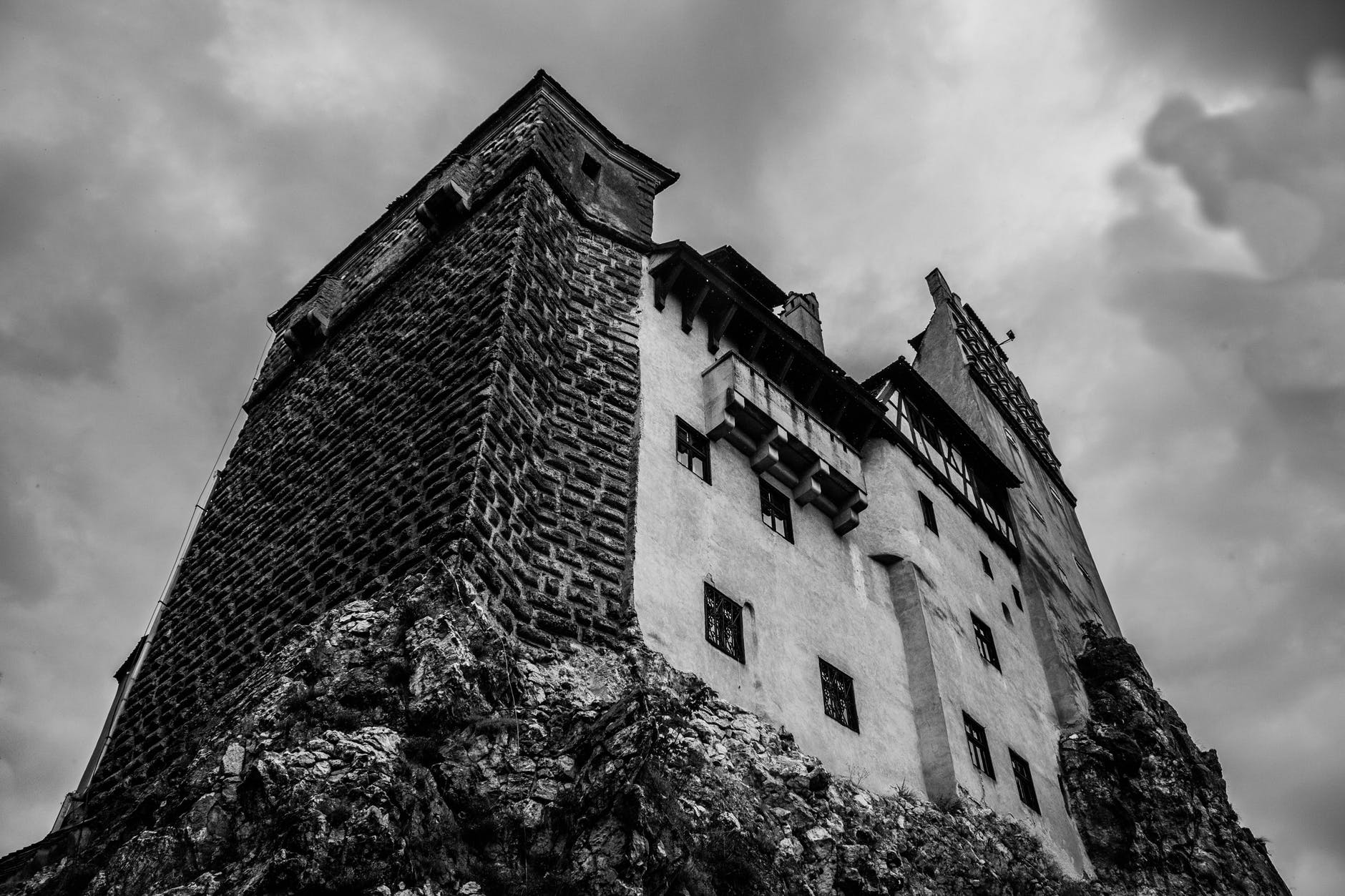
The only castle in Transylvania that fits Stoker’s description, Bran
Castle is widely considered to be “Dracula’s castle.” If the beautiful
building and rich history aren’t enough for you, the castle regularly
offers special exhibitions. If the onsite restaurant is open when
you go, you can try the “Count’s Dessert” (chocolate cake with raspberry
sauce, fresh fruit, and rose petal powder).
After Stoker published Dracula, tourists started showing up
in Transylvania. From the start they were looking to stay in the same
hotel that Jonathan Harker spent a night in (The Golden Crown). The
hotel didn’t exist, but some enterprising soul realized it would be a
great idea to build it. The Coroana de Aur (“Golden Crown” in Romanian)
hotel in Bistrita doesn’t have much in common with the inn Harker
stayed at, but there is a Jonathan Harker Salon at the restaurant. You
can also order authentic Mămăligă (polenta) like Harker ate. No word on
whether they also offer stuffed aubergines.
Live actors and special effects tell the story of Dracula and
how the town of Whitby relates to it. The “Experience” has been
described as a story set in a haunted house, which is appropriate since
the building it’s in is apparently centuries old and haunted. To explore
the building’s ghost sightings and other paranormal activity, a
Paranormal Night takes place the first Saturday of every month (no
special effects here).
The graveyard at St. Mary’s Church is the setting and inspiration for a number of scenes in Dracula.
Try to see how many of the character’s names you can find on the
gravestones (Stoker borrowed a few of them). On the way to the church,
you can climb the 199 steps that a black dog (Dracula in another form)
was seen running up in the book.
And while you’re there make sure to make the 100 metre (340 feet)
trek from St. Mary’s to Whitby Abbey, another source of Stoker’s
inspiration. Explore the ruins before checking out the on-site museum
and shop. The Abbey hosts all kinds of Dracula-themed events, so check the schedule before you go.
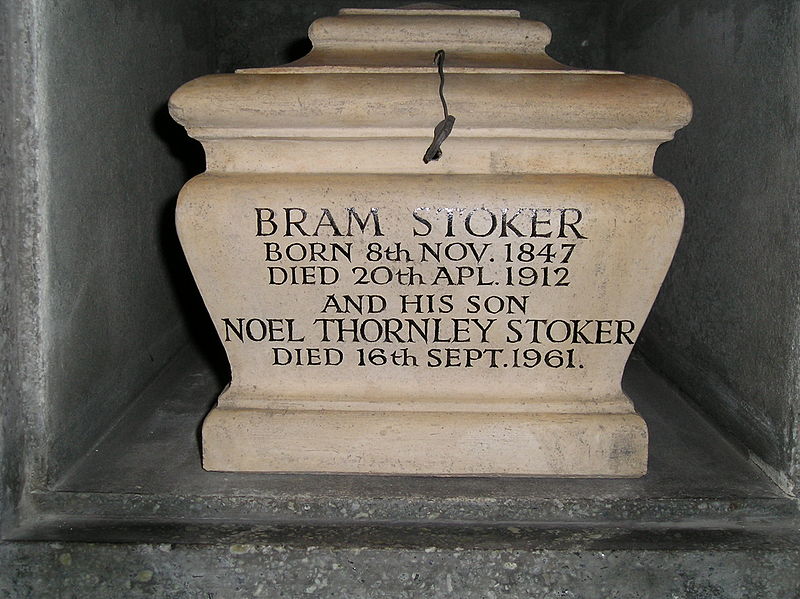
If you’re in London, you can go pay your respects at the final
resting place of the man who brought the world Dracula. You do need to
book ahead because the building is kept locked. If you can’t make it
there in person, you can leave a virtual flower in his honour.
These are just a few of the Dracula-related places to visit, and I
expect more will open as tourism eventually returns to normal. Do you
have a favourite Dracula-themed place or event? Share in the comments…
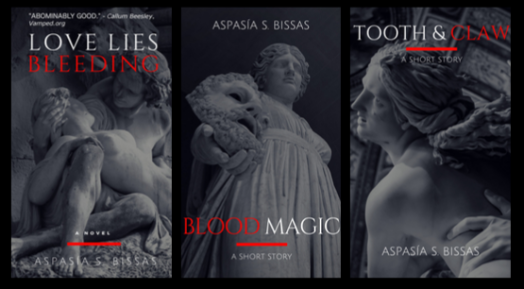
Don’t forget to give other vampires some love too– download my books today!
If you prefer paperback, use this link to order Love Lies Bleeding from
Bookshop – a portion of each sale goes directly to independent
bookstores, as well as to myself. Thank you for supporting indie! ♥
Whenever a show has a devoted fandom there’s always going to be
something that, right or wrong, the fans aren’t happy about. The big
controversies on Buffy and Angel were the late
additions of two new characters, namely Dawn and Connor. Now that I’m
re-watching both shows, I’m looking at both characters with fresh eyes,
wondering whether they deserved the hate.
Dawn
Dawn was introduced at the end of the first episode of Season 5. “Buffy vs. Dracula”
(a great episode, by the way). Her introduction was really well done,
first with hints and foreshadowing going back as far as Season 3, then
with her unexpected appearance in the episode. After years of being an
only child, Buffy suddenly has a sister, and everyone acts as though
she’s always been there.
After some perfunctory hinting that Dawn is this season’s Big Bad, it
comes out that she’s actually a mystical, dimension-unlocking Key, put
into human form by some monks with too much time on their hands, and
given to the Slayer as a sister for protection from the Hell God
(Glorificus/Glory), who needs the Key to get back to her hell dimension
before her window of opportunity closes. Got all that?
Yeah, it’s a lot.
I really believe all the planning around Dawn went into the
character’s concept, and very little into the execution. Dawn is
supposed to be fourteen when she shows up, but she’s written like she’s
eight. It’s both painful and annoying to watch this teenager smiling
with her mouth plastered in ice cream. Or interrupting Buffy’s training
sessions because she’s “bored.” Or threatening to tell their mom that
Buffy slayed in front of her. At fifteen, Buffy, Willow, and Xander were
fighting monsters, trading quips, and hanging out at the Bronze. Their
characters were funny and interesting. But somehow at fourteen Dawn is
too young to be left alone without a babysitter.
And yet by season six Dawn manages to get worse, alternating between
whining that no one spends time with her, and screeching for everyone to
get out of her room. Maybe this is a realistic portrayal of teenagers
(I have my doubts), but nobody watches TV for realism. If we’re supposed
to sympathize with Dawn, the writers made it really difficult,
especially when she shows no empathy for what anyone else is going
through.
(I want to add that none of this is the fault of Michelle
Trachtenberg, the actress who played Dawn. She did a decent job, but
just didn’t have much to work with.)
By the seventh and final season, Dawn’s over her annoying phase, and
even proves herself useful and capable– but she also fades into the
background. Season five was supposed to be the show’s last season, but
since it ended up extended for another two years, I don’t think they
really knew what to do with her once she was no longer The Key. Overall,
I think the Dawn character had a lot of room for improvement, and the
writers/producers repeatedly dropped the ball. The show could have been
just as good, or better, without Dawn.
Connor’s origin story begins in season 3, and is almost as convoluted
as Dawn’s. When two vampires hate each other very much (after spending
centuries together as a couple), and unknown forces conspire to get them
back together for a night, sometimes the mommy vampire finds herself
nine months later going into labour in a back alley, where she finally
just stakes herself to get the whole thing over with.
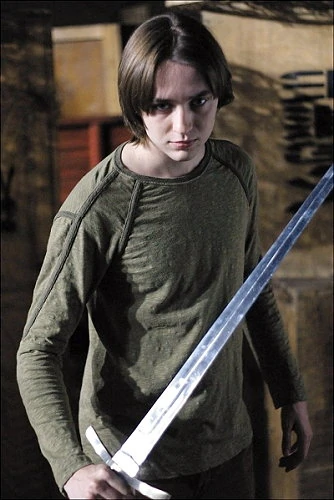
Connor is the human-ish son of Angel and Darla, both vampires, one
with a soul. His existence is cause for much excitement, mostly by
nefarious cabals who generally want to kill the kid. Despite Angel and
co.’s best efforts to protect baby Connor, he ends up in the hands of
Angel’s longtime enemy, a vampire hunter named Holtz. Stuck between
letting Holtz take the baby or watching Connor fall into the hands of
those who will definitely kill him, Angel chooses the lesser of two
evils. Holtz escapes with the baby by jumping through a portal to the
darkest hell dimension: Quor’toth. The portal is then sealed behind them
with no way to open it.
Angel tries to get Connor back, but realizes it’s impossible. Once
Angel accepts that he’ll never see his son again (it takes only a few
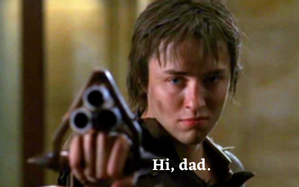
days, apparently), another portal opens and out comes an armed teenager
wearing a skin suit and trophies made of body parts. I’m not gonna lie–
it’s pretty epic.
We soon find out that not only did Connor survive Quor’toth, but he
can kick some serious ass. Besides impressive fighting skills, he has
super speed and strength. He can easily jump on a moving bus and he’s
got a vampire’s sensitive hearing (but none of the drawbacks, like a
need to consume blood or intolerance to sunlight).
I thought he was an excellent addition to the show, but a lot of
people disagreed. Connor was so hated by some fans that when rumours
started about bringing Spike to Angel,
people started urging (there may have been a petition– I can’t
remember) the producers to kill off Connor and bring on Spike. Note:
none of the characters actually had to die to add Spike to the cast. It
should also be noted that the dislike of Connor spilled over into people
specifically targetting Vincent Kartheiser, who played Connor. The
actor did an awesome job and deserved none of what was directed at him.
This is why fandoms have a bad reputation.
I never understood why people found Connor annoying. Yes, the
character did a lot of questionable– and some downright wrong– things
(same as pretty much all the other characters, I might add). What haters
didn’t seem to get (or care about) is that Connor is a deeply
traumatized kid. He was raised in a hell dimension, by a man who
(rightfully) hated his father and manipulated him into wanting to kill
Angel. And that’s only the start of what Connor went through. He’s a
tragic character who manages to never be boring. He also undergoes a
fair bit of character development, and a redemption that continues in
the comic books (meanwhile Dawn in the comic books goes back to being
annoying, but with added recklessness). Watching these episodes again,
I’m finding I like and sympathize with Connor even more now. It’s too
bad he was hated– he could have pulled off his own show.
In the end, my opinion on these characters hasn’t really changed. Dawn didn’t improve Buffy,
even though her initial season included one of the best villains ever.
Meanwhile, Connor, despite having one of the cringiest storylines (him +
Cordy = ew), was a great character and a solid addition to Angel. But what did you think of Dawn and Connor? Share in the comments…
If you prefer paperback, use this link to order Love Lies Bleeding from
Bookshop – a portion of each sale goes directly to independent
bookstores, as well as to myself. Thank you for supporting indie! ♥
But first, on earth as vampire sent, Thy corse shall from its tomb be rent: Then ghastly haunt thy native place, And suck the blood of all thy race; There from thy daughter, sister, wife, At midnight drain the stream of life; Yet loathe the banquet which perforce Must feed thy livid living corse: Thy victims ere they yet expire Shall know the demon for their sire, As cursing thee, thou cursing them, Thy flowers are withered on the stem.
Lord Byron, 1812 (published in 1813)
In this post I'll be exploring the life and work
of George Gordon Byron, better known as Lord Byron: poet, adventurer,
freedom fighter, the original celebrity, cursed soul, granddaddy of
goths, and the first modern vampire (probably not literally).
If you weren’t aware, vampires weren’t always the charismatic, sexy,
human-seeming creatures we know them as these days. The vampires of
times past were generally monstrous, charmless, and often more like
zombies than what we now consider vampires to be (take a look at my post
A Further 5 Vampires You May Not Have Heard Of). That all changed with Lord Byron.
When Byron was born in 1788, he had a caul
over his face. There are many superstitions about cauls. Some believe
being born with one is lucky and the child is destined for greatness,
some believe the child will have second sight. In Romania the belief is
that those born with a caul become vampires after death.
Byron’s childhood was fairly traumatic by any standards. His father
was rarely around (and when he was, his presence didn’t improve
anything), his mother was an alcoholic, and his governess abused him. At
age 10, he inherited the title Baron Byron of Rochdale, along with the
family’s ancestral home, Newstead Abbey, which incorporated the ruins of
a Gothic monastery. At some point he found a human skull in the
building and took to drinking from it in front of friends, who he’d then
dare to do the same.
Portrait of Lord Byron by Théodore Géricault, 1811
As his popularity grew, Byron cultivated a “cult of personality”
based on his invented romantic and heroic image. He had portraits
painted of himself as different characters: Le Corsair, Scottish sailor,
Egyptian bandit. He adapted his personality, his clothing, and even the
way he spoke, to suit the occasion or who he was with. He presented
himself as a tragic outsider with a mysterious past, a character out of
his own books, and made sure never to let the persona slip.
Byron was one of the first to write about vampires in English. In his
poem”The Giaour” (quoted above) he tells of a man cursed to become a
vampire and destroy his own family. In notes with the poem, Byron
comments on the belief in the Levant, Greece, and Hungary of the Vroucolachas
(or Vardoulacha). After its publication, some expressed fear about
Byron’s hypnotic, or vampiric, ability to control his admirers with his
poetry.
This image Byron created of himself as the archetypal “Byronic Hero” would influence future literary characters such as Heathcliff (Wuthering Heights), Count Dracula, Batman, and Severus Snape, to name a few, as well as real-life celebrities and rock stars like Jim Morrison and Kurt Cobain.
In his unfinished work “Fragment of a Novel” (also known as “A
Fragment” or “The Burial: A Fragment) from 1819, Byron’s character,
Augustus Darvell, brings vampires into the modern age. Darvell is
wealthy, attractive, and blends easily into human society. Although
Byron never completed the story, according to a letter by his doctor and
‘frenemy,’ John Polidori, Byron was planning on having Darvell’s friend
bury him according to strange and ritualistic instructions, only to
come back later and find Darvell alive and wreaking havoc (including
seducing and killing the man’s sister).
Speaking of Polidori, Byron didn’t just write about vampires. he was
portrayed as one in the works of others. Polidori’s story “The Vampyre”
was strongly influenced by Byron’s ideas for the continuation of
“Fragment of a Novel” (Byron was also wrongly given credit for “The
Vampyre,” and Polidori struggled to correct the mistake). Besides
Byron’s influences, the main character “Lord Ruthven” was an
unflattering and exaggerated portrait of Byron. Ruthven is a sexual
predator who is calculating and cruel. He revels in sin and degradation.
Although he looks sickly and cadaver-like, he’s also compelling and
hypnotic. In the end Ruthven gets away with everything, while those
around him suffer.
Lady Caroline Lamb, a married woman Byron had an affair with and then ignored, got back at him through her novel, Glenarvon.
Again, a barely disguised Byron is portrayed as a vampiric (and
somewhat ridiculous) character, howling at the moon and dressing as a
monk. He seduces and ruins every woman he meets and betrays everyone
close to him. Unlike Ruthven, he gets his comeuppance when he’s
confronted by the ghosts of all the women he’s destroyed, and then
throws himself into the sea out of remorse. Lady Caroline is credited
with describing Byron as “mad, bad and dangerous to know”.
Byron and Polidori transformed vampires from the grotesque undead to
attractive and charming almost-humans. Bram Stoker was likely influenced
by Byron when he wrote Dracula, and ever since, vampires in
both print and onscreen are overwhelmingly “Byronic”: tragic,
mysterious, dark, brooding, and embodying (or inducing) lust. Literary
critic Tom Holland wrote in his 1999 essay “Undead Byron” that “vampires
remain recognizably Lord Byron’s descendants.” He also comments, “…the
modern genre of vampire fiction may be seen as perhaps the most vital
and enduring of all the varied expressions of Byronism.” As violent and
bloodthirsty as the modern vampire can be, fans are under their spell,
as much as Byron’s fans were under his.
Even in his own time, it didn’t go unnoticed that Byron had more than
a few vampiric qualities. People around him complained that he was
draining the life from them, and overshadowing them with his “almost
supernatural magnetism.” Critics claimed he hypnotized and subjugated
his followers. Byron himself felt he was cursed, pointing out that many
of the people closest to him suffered misfortune, or died tragically.
Amelia Opie, a woman Byron had charmed, claimed he had “such a voice
as the Devil tempted Eve with; you feared its fascination the moment you
heard it.”
And like a true vampire, Byron was immune to conventional life and the rules and judgments of polite society.
He was seductive and insatiable, not unlike vampires, although his
appetite was for sex, not blood. He was openly bisexual and had a
particular taste for married women, but not so particular that he didn’t
also sleep with admirers, servants, prostitutes, and his half-sister.
It was rare that anyone turned him down.
In a letter from 1819, Byron claimed to have no interest in vampires:
“I have besides a personal dislike to ‘Vampires,’ and the little
acquaintance I have with them would by no means induce me to reveal
their secrets.”
Reading this, I can’t help thinking that “little acquaintance” indicates that there was some
acquaintance. And what secrets of theirs was he keeping, exactly? It’s
not difficult to imagine that as he toured Europe and came into contact
with many of the cultures that had strong vampire folklore, he might
have encountered a creature that wasn’t quite human. At one point in his
travels, he was claiming that “spies” were following him through Geneva
and Flanders. Were they journalists looking for hot gossip to publish,
or maybe something more?
In 1823 Byron went to Greece to fight for Greek independence from the
Ottoman Empire. He spent 4,000 pounds (equivalent today to about
477,000 USD or 382,000 GBP) of his own money to refit the Greek naval
fleet. He also took command of a Greek unit of elite fighters.
Unfortunately, he fell ill with a “fever” on 15 February 1824.
Ironically, doctors bled him to treat the illness, which most likely led
to his death.
Byron died on 19 April 1824, aged 36. Some say his heart was cut out
and kept in Greece, where, to this day, he’s a national hero. In any
case, his body was returned to England. He was supposed to be buried in
Westminster Abbey, but the Dean of Westminster refused on the grounds of
Byron’s “questionable morality.” (They did add a memorial plaque to
Byron in 1969.) He was instead buried in the Church of St. Mary
Magdalene in Hucknall.
His death didn’t end the vampire rumours about Byron. Because people
kept insisting that his coffin was empty, in 1938– more than a century
after his death– the vicar of Hucknall agreed to open the casket. Byron
was inside, naked and well-preserved, The vicar stated:
‘Reverently, very reverently, I
raised the lid and before my eyes lay the embalmed body of Byron in as
perfect condition as when it had been placed in the coffin … his
features and hair easily recognisable from the portraits with which I
was so familiar. The serene, almost happy expression on his face made a
profound impression on me … I gently lowered the lid of his coffin – and
as I did so, breathed a prayer for the peace of his soul.’
And so Lord Byron rests in peace…or maybe not.
What do you think? Did Byron become a vampire, or just play one on the page? Share in the comments…
Celebrate Byron's legacy with some new vampire books:
If you prefer paperback, use this link to order Love Lies Bleeding from
Bookshop – a portion of each sale goes directly to independent
bookstores, as well as to myself. Thank you for supporting indie! ♥
In honour of the 125th anniversary of the publication of Bram Stoker’s Dracula, English Heritage is hoping to break the world record for “Largest Gathering of People Dressed as Vampires.” The current record involves 1039 people, and EH hopes to get 1897 participants of all ages (1897 being the year Dracula was published).
The event will take place at Whitby Abbey in northeastern England. Stoker spent time in Whitby, finding inspiration there for parts of Dracula.
Would-be vampires must adhere to a dress code: “full traditional
vampire fancy dress costume,” which includes black pants or a dress,
waistcoat and white shirt, a black cape or collared overcoat (lining
doesn’t need to be black), black shoes, and fangs over your top teeth.
There will also be performances of excerpts of Dracula and live music.
Details
Date: 26 May 2022 (World Dracula Day)
Time: 6 pm to 9 pm (record attempt will take place from 6:45 pm to 7:15 pm)
Cost: Tickets are free to anyone in costume, but they do need to be reserved in advance
If you prefer paperback, use this link to order Love Lies Bleeding from
Bookshop – a portion of each sale goes directly to independent
bookstores, as well as to myself. Thank you for supporting indie! ♥
Cheers,
Aspasía S. Bissas
(Originally posted on my official site. Follow me there: AspasiaSBissas.com)
Over the 123 years he’s been with us, Dracula has encountered all
sorts of other characters, some more memorable than others. Here are
some of my favourite Count crossovers…
Dracula vs. King Arthur
After making a deal with Lucifer to become a vampire, Lucifer then
decides to send Dracula back to Arthurian times to take over the world.
Hi-jinks ensue over the course of this comic book’s four-issue run. It’s
maybe not the best-executed crossover (Lucifer wants to send Dracula
back in time to before vampires existed so the Count can start turning
humans and spreading evil– so why send him back to the time of legendary
heroes? Why not to, I don’t know, any other time in history that wasn’t
legendary?), but the concept of Dracula vs. King Arthur is a good one,
and Camelot fighting Dracula is a fun idea (Merlin as sinister anti-hero
doesn’t hurt, either).
*Yes, Frankenstein is the doctor, not the monster. It’s been over 200 years of people calling the monster Frankenstein– can we just accept it?
Dracula vs. Zorro
Zorro and Dracula meet on a ship heading to Europe and become instant
enemies. Although it’s hate at first sight, the fight doesn’t get
serious until they meet up in the catacombs of Notre Dame Cathedral in
Paris (as one does). As a fan of both Zorro and the Count I’m not sure
who to root for in this mashup, although I am slightly disappointed that
(spoiler) Dracula doesn’t turn Zorro. Now that would be an interesting
story…
Dracula vs. Sherlock Holmes
I don’t know why I was surprised that Dracula has met up with Sherlock Holmes, but he has– and numerous times,
too. I haven’t seen or read any of the existing versions (yet), but
there’s one Dracula/Sherlock crossover I would love to see, and that’s
one put together by Steven Moffat and Mark Gatiss, creators of the BBC’s
Sherlockand Dracula (2020). It’s true I didn’t really enjoy their Dracula miniseries earlier this year, and the last season of Sherlock
left a lot to be desired, but if the two of them were inspired and
brought their A game, they could make a crossover for the ages with
their versions of these characters. Dare we hope?
Dracula vs. Batman
It’s definitely worth seeking out the animated The Batman vs. Dracula if you’re a fan of either character. Based on The Batman
TV series, the story brings Dracula to Gotham, while also featuring
some of the typical characters you’d expect, like Penguin and Joker. The
movie touches on the influence of Dracula on Batman, which I appreciate. The animation is fantastic, especially for Dracula and the other vampires. I actually reviewed
this movie years ago, if you feel like taking a look
(I have since come to appreciate Dracula more as a character). I don’t
think there are any plans for a sequel, but I would love to see more
Dracula-Batman stories.
There are other great Dracula crossovers, but I’m going to
save those for another post. In the meantime, which is your favourite
(including those not mentioned here)? Who would you like to see Dracula
go up against? Share in the comments…
Want to read about vampires that aren't Dracula? Download my books...
If you prefer paperback to ebook, order Love Lies Bleeding from Bookshop – a portion of each sale goes directly to independent bookstores, as well as to myself. Thank you for supporting indie! ♥
It's probably safe to say that most of us in English-speaking countries are familiar with Bram Stoker’s Dracula. If we haven't read the book, we know the character, and it's likely we've seen at least one adaptation. But how do other countries view the Count?
Drácula, a 1931 Spanish film adaptation of Stoker’s work, was filmed at night using the same sets as the 1931 English version
starring Bela Lugosi. Because the Spanish crew got to see the English
dailies every night, they had a chance to adjust camera angles and other
details to produce what many fans believe is a superior film.
Japan: Evil of Dracula
Evil of Dracula
Toshio Kurosawa in Evil of Dracula.
Evil of Dracula (original title: Chi o suu bara “Bloodsucking
Rose”) is the third part of a Japanese trilogy, known as the
Bloodthirsty Trilogy, of Dracula adaptations (some more loosely adapted
than others). In this version, the vampire bites his victims on the
breast, rather than on the neck (hey, it was the 70s).
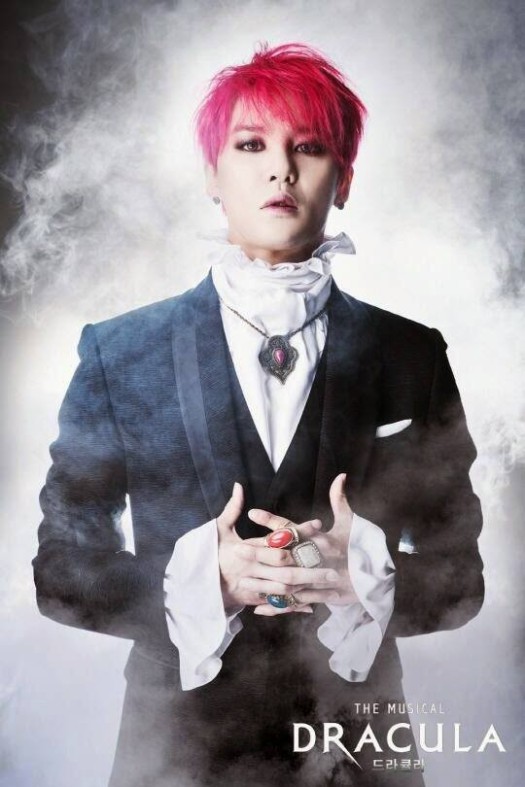
South Korea: Dracula, the Musical
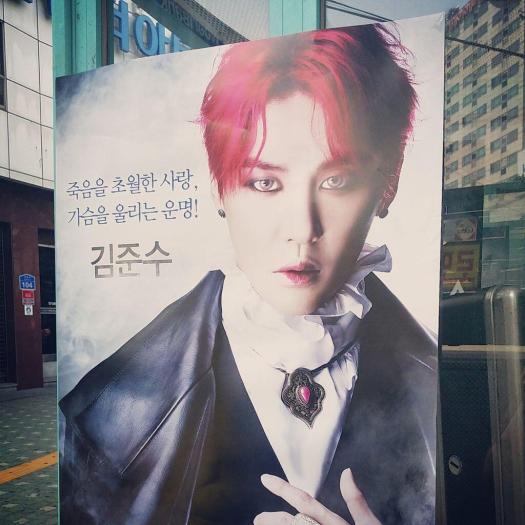
Dracula, The Musical, poster in Seoul
Dracula, The Musical, debuted in South Korea in 2014, starring Kim Jun-su in the titular role. Although based on a 2004 Broadway musical, the Korean version seems uniquely their own. This post
has plenty of photos and info, including lyrics to one of the songs.
Anyone else think North America could use a rebooted musical Dracula, including the pink hair?
South Africa: Dracula Adult Panto
Another stage adaptation, Dracula Adult Panto
brings the gender-bent Count(ess) to South Africa, along with a dash of
humour and an LGBT+ twist. At the end of the show, the venue transforms
into a dance floor, and attendees spend the rest of the night partying.
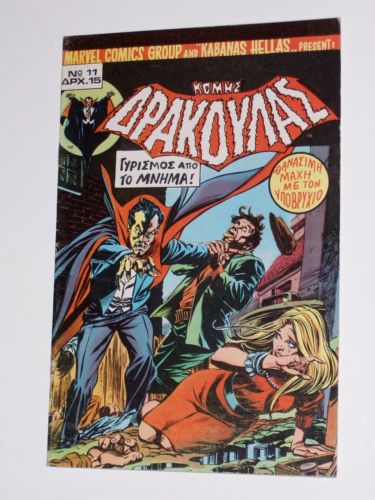
Greece: Tomb of Dracula aka Κόμης Δράκουλας
Tomb of Dracula, Greek version
Not a unique adaptation, but I thought the Greek edition of Marvel’s Tomb of Dracula
was worth a share. Interestingly, in Greek his title can translate to either
Count or Earl (you’ve heard of Earl Grey–now tremble before Earl
Dracula!) I wish my parents had thought to pick me up a few copies of
these when I was a kid; alas, my Greek-language education
remained pitifully vampire free.
Which is your favourite non-English version of Dracula? Is there
another one you think I should know about? Share in the comments…
Cheers,
Aspasia S. Bissas
(Originally posted on my official website: https://aspasiasbissas.com/2019/05/26/world-dracula-day/ for World Dracula Day, Please like and follow there.)