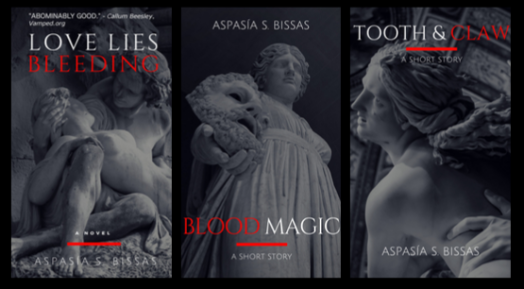
If you prefer paperback, use this link to order Love Lies Bleeding from
Bookshop – a portion of each sale goes directly to independent
bookstores, as well as to myself. Thank you for supporting indie! ♥
Also, now is a great time to follow me on my official site: AspasiaSBissas.com
Dragonscale Clippings recently shared a review of Love Lies Bleeding:
Love Lies Bleeding by Aspasia S Bissas Although this novel starts off almost predictably (for a vampire tale) it soon develops into something quite unusual. Read more…
Give it a read, and don’t forget to stop by Dragonscale Clippings’s blog and follow and like! Many thanks for the kind review ♥
Speaking of reviews, if you’ve read and enjoyed any of my books,
please take a minute now to leave a rating or review (links below). And
if you haven’t read my books yet, now is the perfect time to start…
Paperback available from Bookshop
– when you use this link, a portion of each sale goes directly to
independent bookstores, as well as to myself. (It’s also available on
most other online book sites.)
Blood Magic
Myth and magic collide in this story about choices, transformation, and retribution.
It’s that time of year again– the Smashwords end-of-year e-book sale has begun! Get Love Lies Bleeding for 25% off (and as usual, Blood Magic and Tooth & Claw
are free)! The holidays are a great time to catch up on your reading
(or maybe even complete a challenge). Download my books and get started
right now….
Chances are when you think of vampires you’ll think of Spike, Nick Knight, Miriam Blaylock, or any of the other fanged creatures-of-the-night that populate modern culture, including Mara from Love Lies Bleeding.
The vampires we’re familiar with are (generally) human looking,
powerful, often charismatic and attractive, with a thirst for blood and a
dislike of stakes. But that wasn’t always the case. History and
folklore are full of types of vampires that are nothing like what we’ve
come to expect. Here are five examples…
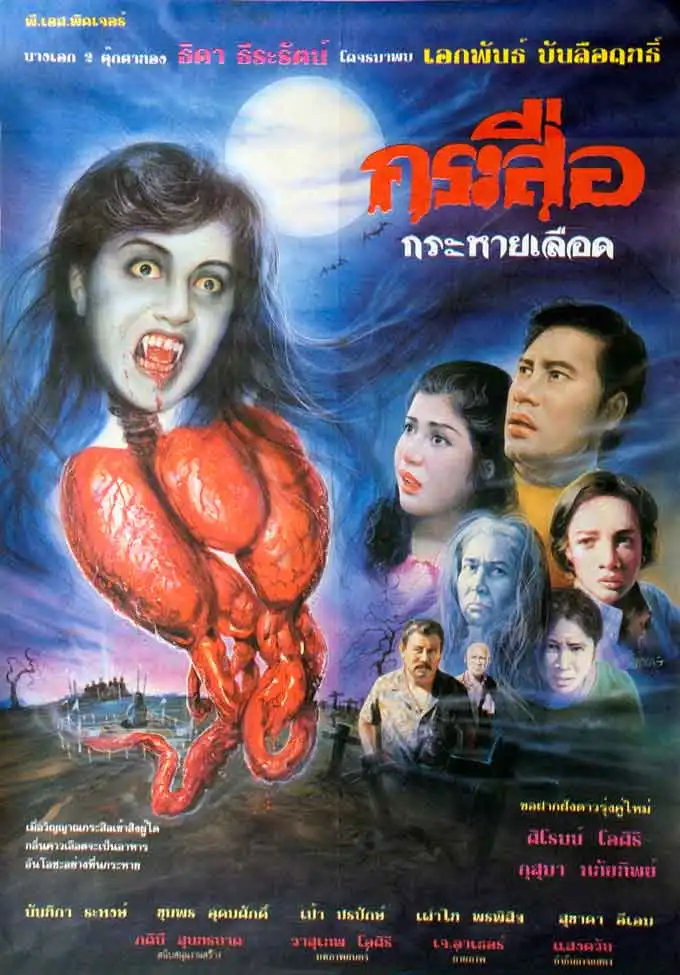
Krasue
Similar to the penanggalan
of Malaysia, the krasue is a type of ghostly vampire from Thailand that
preys on chickens and cattle. The krasue has the face of a beautiful
young woman (or sometimes an old woman), but instead of a body she has
hanging organs and entrails. She’s also luminescent, and can be
considered a form of will o’ the wisp.
Like most vampires, she has fangs, and like most ghosts, she moves by
floating. A common belief is that women who live sinful lives are cursed
to become krasue after death (or that the curse will be passed on to
their daughters and granddaughters). Another belief is that eating food
contaminated by krasue saliva or flesh will turn someone into a krasue.
And, as has been the case countless times throughout history, women in
small communities acting “strangely” were/are suspected of being witches
and monsters, or in this case– of becoming krasue at night. Krasue are
always hungry, seeking out blood or flesh to consume. If blood isn’t
available they’ll settle for rotting food, corpses, or feces. The krasue
needs to reattach to her headless body before dawn, so destroying the
body also destroys the krasue. Other ways to kill krasue include
cutting the organs and entrails off or burning her. A krasue can be
prevented from entering the home by surrounding it with something spiky,
like bamboo, which the krasue will avoid in order not to get her
entrails caught. There have been several krasue sightings in Thailand in
recent years, most– but not all, debunked.
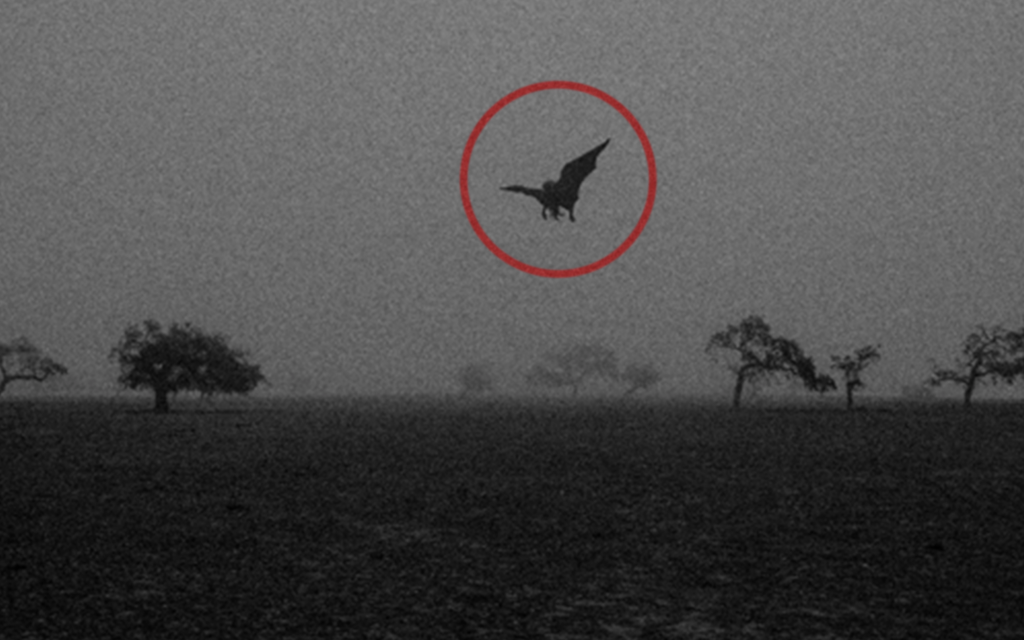
Manananggal
The manananggal is from the Philippines and is similar to the
penanggalan and krasue in the way it separates from the lower half of
its body, trailing intestines behind. Unlike the other two, the
manananggal has large, bat-like wings, and can be either male or female
(although they’re usually female). Another name for manananggal is
“tik-tik,” which is the sound the tiktik birds make as they accompany
the manananggal when they’re flying. Apparently the sound gets fainter
the closer they get, a tactic meant to confuse their victims. One
becomes a manananggal either by inheriting the condition, performing a
ritual, or surviving a manananggal attack. While they have fangs,
manananggal perch on roofs and use their long, proboscis-like tongues to
suck the blood from sleeping victims. They’re also known to eat flesh
and organs. Preferred prey is pregnant women, fetuses, and newlyweds
(particularly the grooms, as manananggal is said to have been left at
the altar). Like many vampires, manananggal hate garlic and holy water;
unlike most vampires they also can’t stand salt, vinegar, spices,
daggers, and the tails of stingrays. To keep a manananggal away from
your house, leave pots of uncooked rice, salt, or ash around. To kill a
manananggal, spread salt, ash, or crushed garlic on the detached lower
half. The top half won’t be able to reattach and will then die at
sunrise.
ETA: a commenter let me know that the manananggal can also transform
into a wild pig (!), and that “Oftentimes, a woman suspected of being
one is asleep during the day.” Thanks for the extra info!
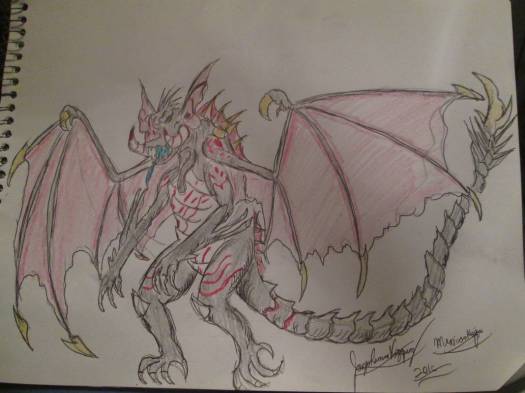
Sasabonsam
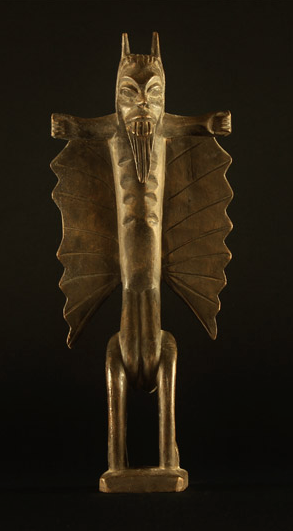
Ashanti Sasabonsam/Asanbosam figure, via Into the Wonder
Sasabonsam, also known as Asanbosam, is a vampiric being in the
folklore of the Akan people of southern Ghana, Cote d’Ivoire, and Togo.
Instead of feet they have iron hooks, which they use to dangle from
trees in order to attack from above. They also have iron fanged teeth
and bat-like features, including pointed ears and 6 metre- (20 foot-)
long wings. Sasabonsam are territorial creatures, feeding on anyone who
enters their forests. They eat flesh, as well as drinking blood, and
they can infect people with a wasting illness (a common theme in vampire
lore) with just a look. There is a claim that a man killed one by
“fatally injuring it,” but I can’t find more details about it. Because
of their hook feet, they can’t move well on the ground, so in theory you
could get away from a Sasabonsam if you can run fast enough to get out
from under the trees before they can grab you. Then again, it’s said
that they like to play with their victims, like cats sometimes do with
mice, so running might not help much.
Pricolici
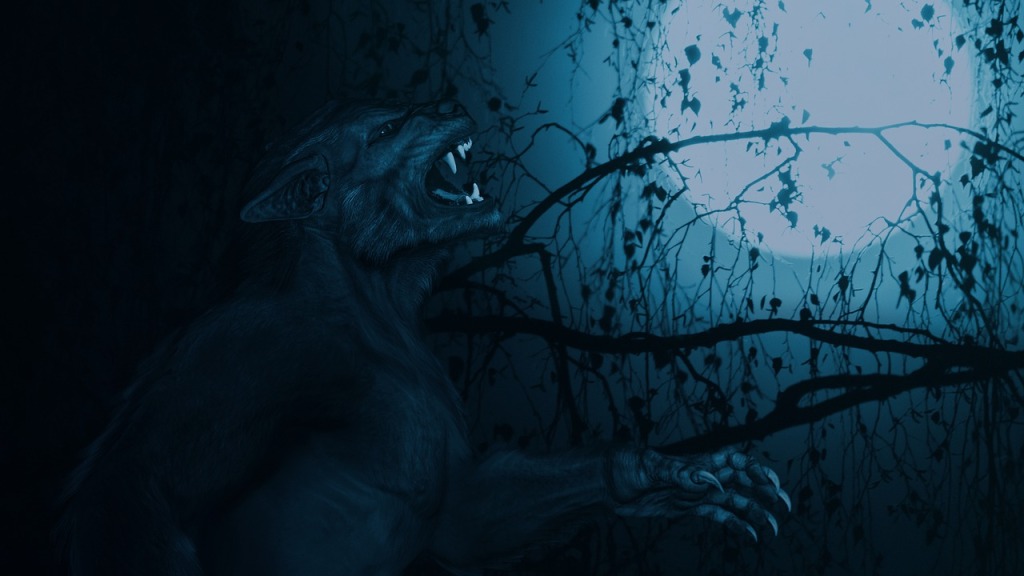
A creature from Romanian folklore, the pricolici is a hybrid
vampire-werewolf (together at last!) Some claim they are undead souls
risen from the grave in wolf form. Others say that pricolici are
werewolves in life, who then rise after death as vampires. Men who are
cruel or violent in life are likely to become pricolici after death. In
any case, pricolici are especially vicious undead that enjoy hurting the
living.
Greece (influenced by the myths of neighbouring Slavic countries)
brings us our final (for now) vampire: the vrykolakas. Interestingly,
while vrykolakas is generally considered to be a vampire, its name (from
the Bulgarian vǎrkolak) means werewolf, and by modern
definitions it’s closer to a zombie than a vampire. Vrykolakas don’t
decay after death, but their bodies become swollen with blood, giving
them lifelike ruddy complexions. They generally roam around wreaking all
sorts of havoc, including causing epidemics. Vrykolakas sometimes sit
on victims as they sleep, crushing or suffocating them. It was also
believed (and still is in some places) that they would knock on doors,
calling the names of people inside; if anyone opened the door, they
themselves would die within a few days and become a vampire. One could
also become a vrykolakas by living a sacrilegious life, being buried in
unconsecrated ground, or eating the meat of a sheep that had been
injured or killed by a wolf. Like the pricolici, it was also thought
that a werewolf could become a vampire after death, retaining wolf-like
fangs, hairy palms, and glowing eyes. The vrykolakas eats flesh rather
than drinking blood, and it has a particular fondness for livers
(possibly with a nice Chianti). The longer they are allowed to roam and
feed, the stronger they become. To kill a vrykolakas, the body needs to
be destroyed, which is done by impaling, beheading, dismembering, or
cremation. Destroying the body has to be done on a Saturday, which is
when the vrykolakas is believed to rest. During the Great Famine
of 1941-1942 in Greece, so many people died that burial on consecrated
ground became impossible. Families started pre-emptively destroying
bodies so that their loved ones wouldn’t become vrykolakas.
Have you heard of these vampires? Which do you think is scariest? Tell me in the comments…
If you prefer paperback, use this link to order Love Lies Bleeding from
Bookshop – a portion of each sale goes directly to independent
bookstores, as well as to myself. Thank you for supporting indie! ♥
Love Lies Bleeding‘s readers know that main character Mara is both a vampire and a botanist. Trained when she was still human, she continues to study plants and have a garden. This post is ninth in a series exploring Mara’s plants. Are you interested in botany, gardening, or plant lore? So are some vampires…
Please note: Medicinal uses are given for informational purposes only. Always consult a medical professional before diagnosing or treating yourself or anyone else.
Please also note: Nettle is known as stinging nettle for a reason. See "Caution" below.
Botanical Name:Urtica dioica
Common Names: Stinging nettle, common nettle, nettle leaf, stinger, burn nettle, burn weed, burn hazel, feuille d'ortie, slender nettle, tall nettle, wild nettle. (Not to be confused with dead nettle, Lamium spp.)
History: Native to Europe, temperate Asia, and parts of northern Africa, nettle can now be found throughout the world. It grows abundantly in areas that receive regular rain, such as the Pacific Northwest, and locations that have been disturbed by humans (e.g., ditches and fields). The German idiom "sich in die Nesseln setzen," or to sit in nettles, means to get into trouble. The medical term for hives, "urticaria," comes from the Latin word for nettle: Urtica (from urere, "to burn"). It has been used as medicine, food, tea, and as a raw material for textiles since ancient times.
Language of Flowers Meaning: Rudeness, coolness, scandal, pain, slander, cruelty, protection (no two sources I found gave the same meaning).
Cultivation: Perennial. Nettle needs moist, rich soil (it's also an indicator of fertile soil wherever it grows wild). Start seeds indoors about 4 to 6 weeks before the last frost date, or sow seeds directly in spring or autumn. Transplant hardened seedlings in spring, spacing plants 30 cm (12 inches) apart. Make sure to grow nettle away from high-traffic areas in your garden. The plant grows 1 to 2 m (3 to 7 ft) tall in summer and dies back in winter. Harvest leaves in early spring (don't use once the plants have flowered) and roots in autumn. Nettle spreads easily via rhizomes, so if you'd like to grow it but don't want it taking over your yard, keep it contained with a barrier around its roots (if it gets invasive, regular and persistent tilling can help get it under control; otherwise, you may need to resort to herbicides). Add nettle leaves to compost as a source of nitrogen (or make compost tea). You can also forage for nettle in green spaces and open woodland (just be sure it hasn't been sprayed with pesticides or steeped in car exhaust).
TIP: Aphids love nettle. Grow nettle to keep aphids away from other garden plants (like roses).
Uses:
Medicinal: The fresh plant is a traditional spring tonic. Fresh or dried leaves and the powdered root have been used to treat disorders of the kidneys and urinary tract, and for sore muscles, osteoarthritis, rheumatism, and gout. The leaves are also used for skin conditions, to treat anemia, and to reduce hay fever. There is some evidence that nettle lowers both blood sugar and blood pressure. Some folk practitioners still practice Urtication, or flogging with nettles, to treat arthritis and rheumatism, and to increase circulation (although this has been shown to be effective, before you try it keep in mind that Urtication has also been used as a sentence for criminals).
Hair Care: A tea made from nettle leaves can be used as a hair rinse to add strength and shine. Some people believe it also stimulates hair growth, but that is purely anecdotal.
Culinary; Nettles are rich in Vitamins A, B, and C, as well as iron, potassium, calcium, and protein. Use young plants picked in spring (plants that have flowered or gone to seed contain gritty particles that can irritate the urinary tract and kidneys). The sting can be removed by cooking or drying nettles, or by soaking them (I can confirm that cooking and drying works, but I'm hesitant to try the soaking method-- please let me know if you have, and how it went). Fresh nettle can be used like spinach or other greens, or made into chips or pesto. Dried or fresh leaves and flowers can be made into tea. You can also brew beer from young nettles.
Fun Fact: There's a World Nettle Eating Championship, where people compete to see who can eat the most fresh nettles. Those with a low pain tolerance need not apply.
Wildlife: Nettle provides food for the larvae of several species of butterflies and moths. Ladybugs (a beneficial garden insect) also prefer laying their eggs on nettle. When harvesting, watch out for eggs and caterpillars (a curled leaf can be a sign of a resident) and avoid damaging those leaves.
Textiles: Nettle has been used to make a linen-like fabric for at least 3,000 years, and unlike some plants (looking at you, cotton) nettle doesn't need pesticides. Some modern European manufacturers are starting to produce nettle fabric again.
This short video demonstrates how to make nettle fabric:
And this video shows how to make paper from nettles:
Natural Dye: Nettle produces yellow dye from its roots and a yellow-green or grey-green hue from its leaves.
Caution: The leaves of most nettle species are covered in hollow needle-like hairs that inject histamine and other irritating chemicals into the skin when touched, causing a stinging sensation and contact dermatitis (known as contact urticaria). The sting is removed when nettles are cooked or dried. Wear gloves and use caution when handling the fresh plant. Dock leaves are a traditional remedy for nettle stings, and dock often grows close to nettle (you can also use spotted jewelweed, plantain, antihistamines, or anti-itch creams).
Caution 2: Nettle has been deemed likely unsafe to take during pregnancy, as it could potentially cause a miscarriage. Although it has a history of being used to induce lactation, it is now recommended to avoid nettle while breastfeeding. Nettle can also interfere with some medications; let your doctor know if you are using it.
Mara's Uses: Mara would include nettle in tinctures and teas to help strengthen bloodletters (human volunteers used by vampires for their blood) and to prevent or treat anemia.\
If you prefer a good paperback to an ebook, order Love Lies Bleeding from Bookshop – a portion of each sale goes directly to independent bookstores, as well as to myself. Thank you for supporting indie! ♥
But first, on earth as vampire sent, Thy corse shall from its tomb be rent: Then ghastly haunt thy native place, And suck the blood of all thy race; There from thy daughter, sister, wife, At midnight drain the stream of life; Yet loathe the banquet which perforce Must feed thy livid living corse: Thy victims ere they yet expire Shall know the demon for their sire, As cursing thee, thou cursing them, Thy flowers are withered on the stem.
Lord Byron, 1812 (published in 1813)
In this post I'll be exploring the life and work
of George Gordon Byron, better known as Lord Byron: poet, adventurer,
freedom fighter, the original celebrity, cursed soul, granddaddy of
goths, and the first modern vampire (probably not literally).
If you weren’t aware, vampires weren’t always the charismatic, sexy,
human-seeming creatures we know them as these days. The vampires of
times past were generally monstrous, charmless, and often more like
zombies than what we now consider vampires to be (take a look at my post
A Further 5 Vampires You May Not Have Heard Of). That all changed with Lord Byron.
When Byron was born in 1788, he had a caul
over his face. There are many superstitions about cauls. Some believe
being born with one is lucky and the child is destined for greatness,
some believe the child will have second sight. In Romania the belief is
that those born with a caul become vampires after death.
Byron’s childhood was fairly traumatic by any standards. His father
was rarely around (and when he was, his presence didn’t improve
anything), his mother was an alcoholic, and his governess abused him. At
age 10, he inherited the title Baron Byron of Rochdale, along with the
family’s ancestral home, Newstead Abbey, which incorporated the ruins of
a Gothic monastery. At some point he found a human skull in the
building and took to drinking from it in front of friends, who he’d then
dare to do the same.
Portrait of Lord Byron by Théodore Géricault, 1811
As his popularity grew, Byron cultivated a “cult of personality”
based on his invented romantic and heroic image. He had portraits
painted of himself as different characters: Le Corsair, Scottish sailor,
Egyptian bandit. He adapted his personality, his clothing, and even the
way he spoke, to suit the occasion or who he was with. He presented
himself as a tragic outsider with a mysterious past, a character out of
his own books, and made sure never to let the persona slip.
Byron was one of the first to write about vampires in English. In his
poem”The Giaour” (quoted above) he tells of a man cursed to become a
vampire and destroy his own family. In notes with the poem, Byron
comments on the belief in the Levant, Greece, and Hungary of the Vroucolachas
(or Vardoulacha). After its publication, some expressed fear about
Byron’s hypnotic, or vampiric, ability to control his admirers with his
poetry.
This image Byron created of himself as the archetypal “Byronic Hero” would influence future literary characters such as Heathcliff (Wuthering Heights), Count Dracula, Batman, and Severus Snape, to name a few, as well as real-life celebrities and rock stars like Jim Morrison and Kurt Cobain.
In his unfinished work “Fragment of a Novel” (also known as “A
Fragment” or “The Burial: A Fragment) from 1819, Byron’s character,
Augustus Darvell, brings vampires into the modern age. Darvell is
wealthy, attractive, and blends easily into human society. Although
Byron never completed the story, according to a letter by his doctor and
‘frenemy,’ John Polidori, Byron was planning on having Darvell’s friend
bury him according to strange and ritualistic instructions, only to
come back later and find Darvell alive and wreaking havoc (including
seducing and killing the man’s sister).
Speaking of Polidori, Byron didn’t just write about vampires. he was
portrayed as one in the works of others. Polidori’s story “The Vampyre”
was strongly influenced by Byron’s ideas for the continuation of
“Fragment of a Novel” (Byron was also wrongly given credit for “The
Vampyre,” and Polidori struggled to correct the mistake). Besides
Byron’s influences, the main character “Lord Ruthven” was an
unflattering and exaggerated portrait of Byron. Ruthven is a sexual
predator who is calculating and cruel. He revels in sin and degradation.
Although he looks sickly and cadaver-like, he’s also compelling and
hypnotic. In the end Ruthven gets away with everything, while those
around him suffer.
Lady Caroline Lamb, a married woman Byron had an affair with and then ignored, got back at him through her novel, Glenarvon.
Again, a barely disguised Byron is portrayed as a vampiric (and
somewhat ridiculous) character, howling at the moon and dressing as a
monk. He seduces and ruins every woman he meets and betrays everyone
close to him. Unlike Ruthven, he gets his comeuppance when he’s
confronted by the ghosts of all the women he’s destroyed, and then
throws himself into the sea out of remorse. Lady Caroline is credited
with describing Byron as “mad, bad and dangerous to know”.
Byron and Polidori transformed vampires from the grotesque undead to
attractive and charming almost-humans. Bram Stoker was likely influenced
by Byron when he wrote Dracula, and ever since, vampires in
both print and onscreen are overwhelmingly “Byronic”: tragic,
mysterious, dark, brooding, and embodying (or inducing) lust. Literary
critic Tom Holland wrote in his 1999 essay “Undead Byron” that “vampires
remain recognizably Lord Byron’s descendants.” He also comments, “…the
modern genre of vampire fiction may be seen as perhaps the most vital
and enduring of all the varied expressions of Byronism.” As violent and
bloodthirsty as the modern vampire can be, fans are under their spell,
as much as Byron’s fans were under his.
Even in his own time, it didn’t go unnoticed that Byron had more than
a few vampiric qualities. People around him complained that he was
draining the life from them, and overshadowing them with his “almost
supernatural magnetism.” Critics claimed he hypnotized and subjugated
his followers. Byron himself felt he was cursed, pointing out that many
of the people closest to him suffered misfortune, or died tragically.
Amelia Opie, a woman Byron had charmed, claimed he had “such a voice
as the Devil tempted Eve with; you feared its fascination the moment you
heard it.”
And like a true vampire, Byron was immune to conventional life and the rules and judgments of polite society.
He was seductive and insatiable, not unlike vampires, although his
appetite was for sex, not blood. He was openly bisexual and had a
particular taste for married women, but not so particular that he didn’t
also sleep with admirers, servants, prostitutes, and his half-sister.
It was rare that anyone turned him down.
In a letter from 1819, Byron claimed to have no interest in vampires:
“I have besides a personal dislike to ‘Vampires,’ and the little
acquaintance I have with them would by no means induce me to reveal
their secrets.”
Reading this, I can’t help thinking that “little acquaintance” indicates that there was some
acquaintance. And what secrets of theirs was he keeping, exactly? It’s
not difficult to imagine that as he toured Europe and came into contact
with many of the cultures that had strong vampire folklore, he might
have encountered a creature that wasn’t quite human. At one point in his
travels, he was claiming that “spies” were following him through Geneva
and Flanders. Were they journalists looking for hot gossip to publish,
or maybe something more?
In 1823 Byron went to Greece to fight for Greek independence from the
Ottoman Empire. He spent 4,000 pounds (equivalent today to about
477,000 USD or 382,000 GBP) of his own money to refit the Greek naval
fleet. He also took command of a Greek unit of elite fighters.
Unfortunately, he fell ill with a “fever” on 15 February 1824.
Ironically, doctors bled him to treat the illness, which most likely led
to his death.
Byron died on 19 April 1824, aged 36. Some say his heart was cut out
and kept in Greece, where, to this day, he’s a national hero. In any
case, his body was returned to England. He was supposed to be buried in
Westminster Abbey, but the Dean of Westminster refused on the grounds of
Byron’s “questionable morality.” (They did add a memorial plaque to
Byron in 1969.) He was instead buried in the Church of St. Mary
Magdalene in Hucknall.
His death didn’t end the vampire rumours about Byron. Because people
kept insisting that his coffin was empty, in 1938– more than a century
after his death– the vicar of Hucknall agreed to open the casket. Byron
was inside, naked and well-preserved, The vicar stated:
‘Reverently, very reverently, I
raised the lid and before my eyes lay the embalmed body of Byron in as
perfect condition as when it had been placed in the coffin … his
features and hair easily recognisable from the portraits with which I
was so familiar. The serene, almost happy expression on his face made a
profound impression on me … I gently lowered the lid of his coffin – and
as I did so, breathed a prayer for the peace of his soul.’
And so Lord Byron rests in peace…or maybe not.
What do you think? Did Byron become a vampire, or just play one on the page? Share in the comments…
Celebrate Byron's legacy with some new vampire books:
If you prefer paperback, use this link to order Love Lies Bleeding from
Bookshop – a portion of each sale goes directly to independent
bookstores, as well as to myself. Thank you for supporting indie! ♥
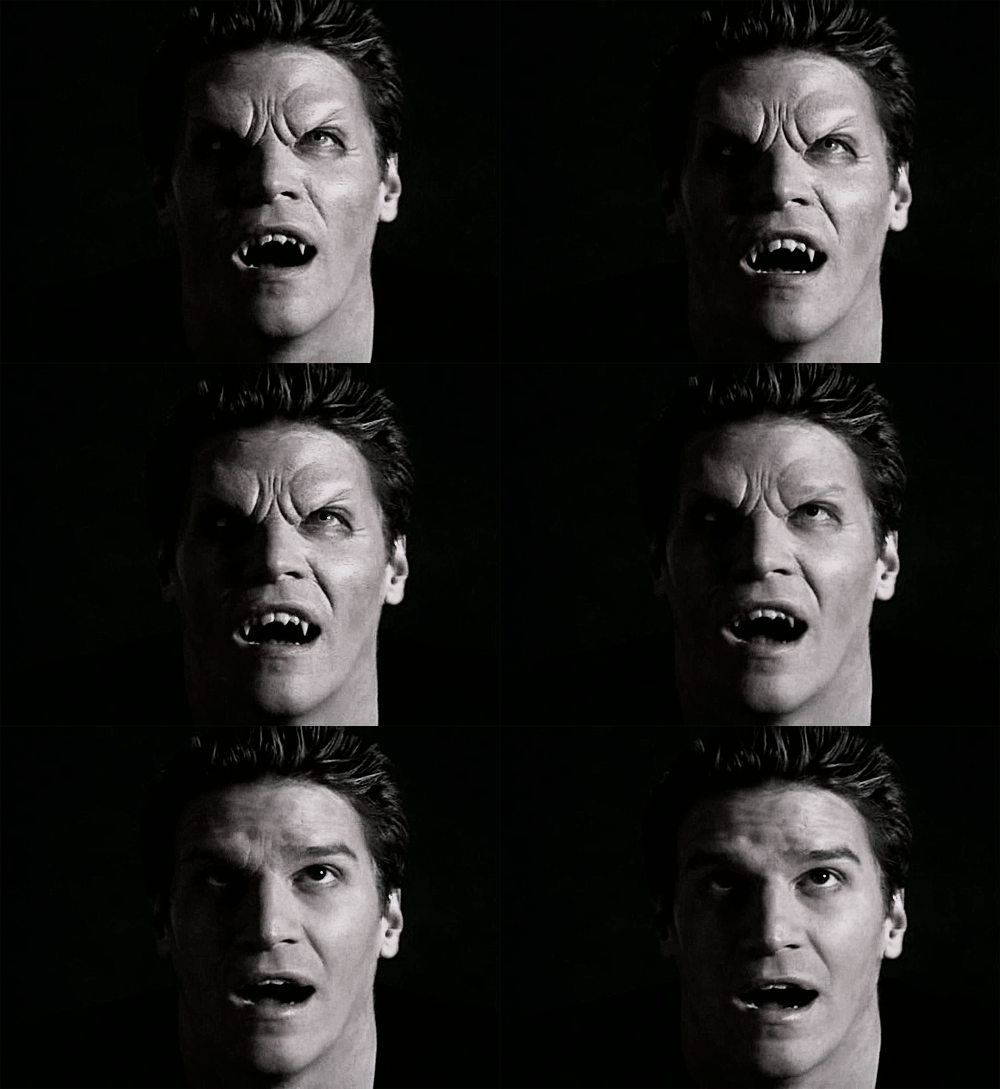
I’m still (re-)watching Buffy and Angel, and there’s something that’s been bothering me about Angelus…
Spoilers Ahead
First, we need some backstory.
in Buffy and Angel mythology, a vampire is made
when a vampire exchanges blood with a human before killing them. The
human’s soul leaves the body (presumably going off to the afterlife),
and the soulless shell reanimates, inhabited by a demon that looks like
the human, and has their personality and all their memories, but with an
aversion to sunlight and a thirst for blood.
Angelus started out like any other vampire, but after killing the
wrong girl he was cursed with a soul. Suddenly his body housed a demon
and a human soul. This unnatural combination led him to spend a hundred
years wallowing in guilt and remorse over what he’d done as a vampire,
before finally deciding to become a broody, but useful, member of
society. Oh, and he also started calling himself Angel.
But the curse had a loophole. If Angel were to ever experience a
moment of true happiness, the soul would go and Angelus would return in
all his murderous glory.
Over the course of both Buffy and Angel, we get to
see both Angel and Angelus, and much as I enjoy the dichotomy, something
about it bothers me. Angel is solitary, reserved, and thoughtful, but
ready to kick ass when necessary. Angelus, on the other hand, is cruel,
revels in violence, and is as meticulous in stalking and torture as the
most evil serial killer. So how is this the same person?
The shows simply claim that it’s the difference between soul and no
soul, but I’m not sure I buy that. The presence (or lack) of a soul
doesn’t completely change your personality. At one point Angel claims he
was a bad person as a human too, but from flashbacks we see he was
mostly a shiftless, carousing layabout and terrible son. That’s pretty
far from a cold-blooded killer (not to mention the other major
personality shifts we see between Angel and Angelus). The Buffy episode “Doppelgangland” even tacitly confirms that a vampire’s personality is basically the same as the human they inhabit.
When vampire Spike gets his soul back (earned, not cursed), his
personality doesn’t significantly change. He might be less likely to
finish off a mortally wounded human once he gets his soul, but if you
watched an episode featuring him without knowing which season it was
from, you wouldn’t necessarily be able to tell whether he has a soul or
not. Another vampire, Harmony, never gets a soul, but shows no
significant change in personality before and after becoming a vampire.
She even loves unicorns.
In the Angel episode “Eternity,” Angel is drugged so that he
feels a chemical high (which they call “happiness” for the sake of the
plot), Until the drug wears off he’s right back to being Mr.
Murder-Death-Kill, as though a switch were flipped. You’d think he’d
still be able to exert his own will, at least a little, to keep Angelus
from completely taking over. He didn’t even lose his soul that time.
Yes, it’s a TV show about vampires and demons, but it doesn’t make any
sense. Not to me, at least.
Maybe having a soul forced on him was traumatic for Angel, causing
his personality to fracture. Maybe the demon inside him is particularly
strong and malevolent. Maybe it really is only human guilt that keeps
Angel from totally going off the rails. Maybe I’m way overthinking this.
What do you think about Angel/Angelus and his split personality? Do
you have your own theories about the difference a soul makes? Share in
the comments…
If you prefer paperback, use this link to order Love Lies Bleeding from
Bookshop – a portion of each sale goes directly to independent
bookstores, as well as to myself. Thank you for supporting indie! ♥
Chances are when you think of vampires you’ll think of Eric Northman,
Drusilla, Barnabas Collins, or any of the other fanged
creatures-of-the-night that populate modern culture, including Mara from
Love Lies Bleeding.
The vampires we’re familiar with are (generally) human looking,
powerful, often charismatic and attractive, with a thirst for blood and a
dislike of stakes. But that wasn’t always the case. History and
folklore are full of vampires that are nothing like what we’ve come to
expect. Here are five examples…
Also known as vetaal or baital, the vetala is a blood-drinking demon
in Hindu mythology that haunts burial grounds and crematoria, hangs
upside down (like a bat) from trees, and possesses dead (or occasionally
living) humans or animals. Not unlike the vampires on Buffy,
the demon sets up shop in the body it’s possessing, while the original
soul that inhabited said body is “completely gone.” Unlike the vampires
of Buffy, the vetala retains none of the memories of the person
it’s possessing. As well, destroying the body doesn’t destroy the
demon, which simply moves on to the next handy body. Vetala are chaotic,
revelling in the damage they cause, including driving people insane and
killing children. Interestingly, some vetala are not evil; there’s even
a Disney Channel series in India where a harmless vetala is friends with a boy. It’s also possible that Bram Stoker was inspired by tales of vetala before he wrote Dracula.
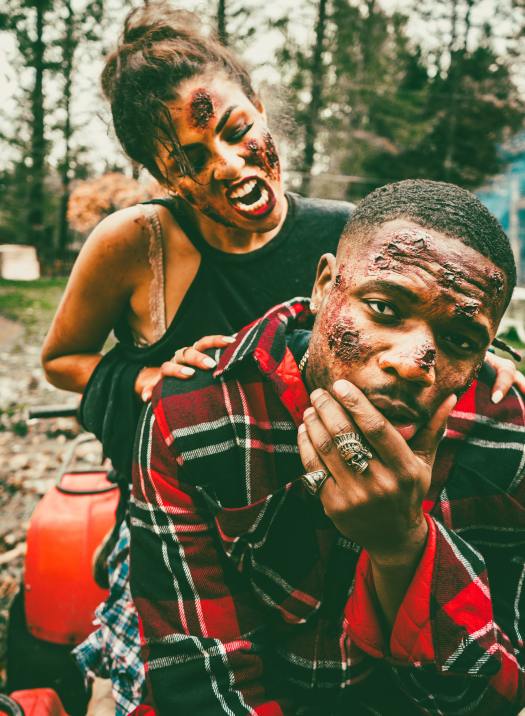
There’s some debate about what revenants actually are. It has been
argued that they are a type of vampire, zombies, or simply generic
undead. Since the word itself means “one who returns,” it could refer to anything from a ghost to (technically) someone coming back from a long trip. Augustin Calmet
wrote in the 18th century that revenants were created by sorcerers “who
sucked the blood of victims.” Most historical accounts agreed that
revenants are caused by the restless spirits of wicked people
re-animating their corpses. Whatever a revenant is, stories show a
number of similarities with classic vampires, from their bodies being
swollen with blood (usually from gorging on it); to only being able to
move about at night; to needing their heads and/or hearts removed and
destroyed in order to finally stop them. Illness and death almost always
follow in a revenant’s wake. While vampires are said to require blood
as sustenance, a revenant doesn’t need the blood it consumes. Another
difference is that revenants, unlike vampires, decompose.
Draugr
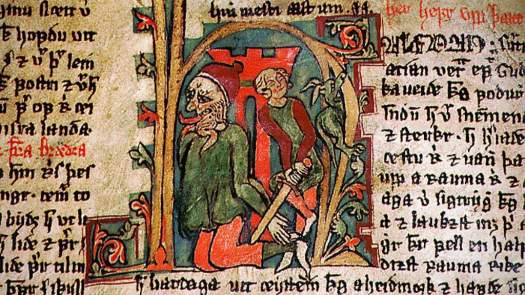
Draugr (or draug, pl. draugur, AKA aptrganga) is essentially a Norse
revenant. Unlike other revenants, draugur can increase their size at
will, are motivated by treasure (as well as revenge and the general
desire to do damage), and are not affected by sunlight (although they
prefer the dark). Draugur have magical abilities and can shape shift
(one form they were known to take was a cat that would sit on a sleeping
person’s chest, getting steadily heavier until the victim suffocated).
They can also rise from their graves as wisps of smoke or pass through
solid rock. Draugur can enter the dreams of the living, leaving a “gift”
as assurance that they were really there. Draugur kill their victims
(both human and animal) by draining their blood, but can also kill by
crushing, devouring, or driving their victims mad. They were also
thought to run animals to death by chasing or riding them. They can be
killed via burning, dismemberment, destruction of the body, or simply by
eventual decay.
(AKA Aizhakos) A pagan shaman on trial during the Hungarian
Inquisition described a demon called Izcacus (meaning blood drinker),
which could be called forth to destroy the enemies of the pagans. The
name has ancient Turkish roots, and may have been originally spread by
migrating tribes who were themselves influenced by the Assyrians.
Specific information on the Izcacus is hard to find, but if it does have
roots in Assyrian vampire beliefs, it could (like other Assyrian
vampires) be a violent, merciless spirit or demon that devours its
victims’ blood and flesh.
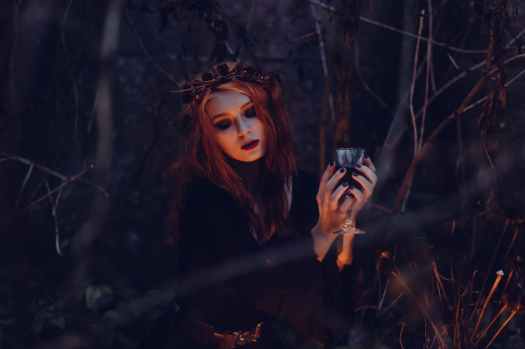
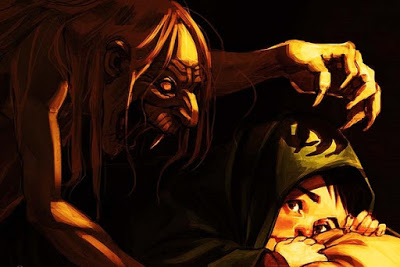
Originating in Spain, the guaxa (AKA guaja or guajona) is an ancient
vampire resembling an old hag (think stereotypical witch) with bright
eyes and bird legs (any relation to Baba Yaga?)
She sucks blood (preferably from children) with her single long
tooth/fang. The guaxa sneaks into homes at night through keyholes and
chimneys, and slowly drains victims over the course of weeks, causing
them to waste away. Unlike most vampires, they are born, not turned. One
source
claims that the guaxa’s weaknesses include silver, antlers, running
water, and magical amulets, but I couldn’t find any corroborating
sources, so it may not be accurate.
Have you heard of these vampires? Which do you think is scariest? Tell me in the comments…
If you prefer paperback to an ebook, order Love Lies Bleeding from Bookshop – a portion of each sale goes directly to independent bookstores, as well as to myself. Thank you for supporting indie! ♥