A while back I read an article
about the connection between literature and perfume, which also
included suggestions for ideal perfumes for book lovers. As someone who
has a slight perfume obsession (reigning favourite: Vanilla Extreme by
Comptoir Sud Pacifique), I was intrigued. I especially liked the idea
behind the Imaginary Authors
perfume company, whose scents are based on the fictional exploits of
made-up authors. But if perfume can be designed for fictional authors,
why not design a few for Love Lies Bleeding’s characters?
Since main character Mara works with herbs and
plants, she’s essentially steeped in their scents without needing to
wear perfume. But if I were to create a perfume for her, it would have
strong notes of sweet woodruff (which smells like vanilla and hay),
clover, and lavender flowers, with hints of smoky peat and black tea.
For human Lee, I envision something fresh and
“green.” His scent would be based on cedar, with some kind of
complementary citrus (yuzu, or maybe tangerine), and the subtlest
undertones of honey and lavender leaves.
Lastly, I think a scent heavy on whisky and tobacco notes, with
something spicy like ginger or cloves, would suit vampire nemesis Dominic.
It would be the kind of scent that’s overwhelming in the wrong hands,
but Dominic probably wouldn’t wear it anyway, as it’s one of those
luxuries he doesn’t think vampires should indulge in.
What do you think– would you wear any of these scents? What perfume
would you design for your favourite character or author? Share in the
comments…
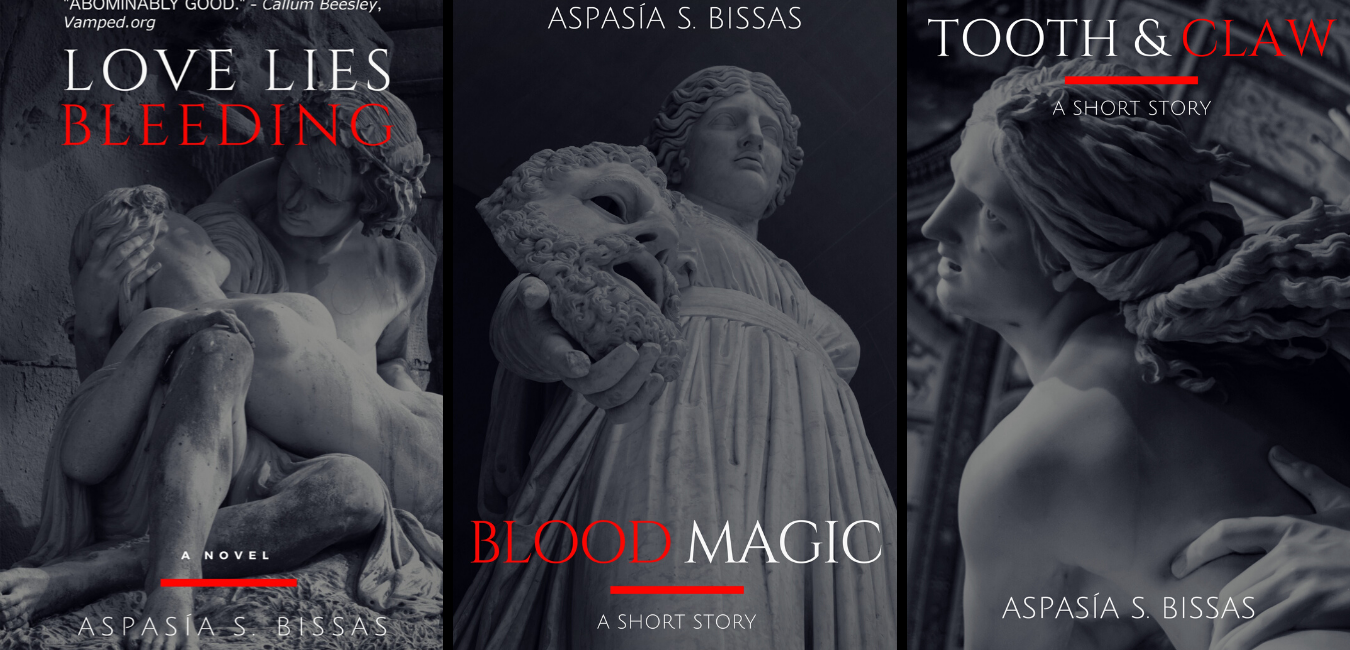
Want to find out more about Mara, Lee, and Dominic? Get my books!
If you prefer a good paperback to an ebook, use this link to order Love Lies Bleeding from Bookshop – a portion of each sale goes directly to independent bookstores, as well as to myself. Thank you for supporting indie! ♥
Love Lies Bleeding‘s
readers know that main character Mara is both a vampire and a botanist.
Trained in botany and herbalism when she was still human, she continues
to study plants and have a garden. This post is third in a series
exploring Mara’s plants. Are you interested in botany, gardening, or
plant lore? So are some vampires…
Please note: Medicinal uses are given for informational purposes
only. Always consult a medical professional before diagnosing or
treating yourself or others.
Latin Name:Lavandula (Species include angustifolia, stoechas, latifolia, and dentata)
Common Names: Lavender, English Lavender, French Lavender, Spanish Lavender, nard
History: Part of the mint family, Lavender is native
to Europe, northern and eastern Africa, and large parts of Asia. Its
use goes back at least to Ancient Egypt, where the oil was used in
mummification. The Greeks and Romans used the plant in their public
baths. In the Middle Ages lavender was used as a strewing herb, where it
was sprinkled on floors to repel insects and sweeten the air with its
scent. The word lavender comes from the French, “lavendre” meaning “to wash,” which itself comes from the Latin name Lavandula, from the verb lavare, “to wash.”
Victorian Language of Flowers Meaning: Loyalty, love, devotion
Cultivation: Perennial (although in less ideal
conditions, it should be considered an annual). Cold hardiness depends
on variety–English lavender (L.angustifolia) tolerates zones 5 to 8; French lavender (L. dentata and L. stoechas)
is suited to zones 8 to 11. Lavender likes full sun and dry sandy or
rocky soil. If you live in an area with heavy clay soils, try growing
lavender in containers or raised beds. The plants need good air
circulation, so don’t crowd them. Lavender generally doesn’t need to be
fertilized. Avoid organic mulches in areas with high humidity (gravel or
rock mulches should be okay). Plants generally bloom from June until
August, and you can extend blooming time by planting a variety of types.
Flowers range in colour from white to pink, light purple to deep
blue-purple, and yellow, depending on variety. Lavender is difficult to
start from seed–it’s best to purchase plants. Water seedlings
consistently until they’re established. Prune plants in spring. Deadhead
spent flowers throughout the season to encourage more blooms. Harvest
just before the flowers are fully open.
Lavender has become invasive and/or weedy in parts of Australia and
Spain. Check with your local authorities before growing it in those
areas.
Bonus: Bees and butterflies love lavender.
Uses:
Medicinal: Lavender
may help calm anxiety and ease insomnia. It’s also been traditionally
used to treat intestinal disorders and cardiovascular diseases, and has
been found effective in fighting fungal infections.
Essential Oil:
Lavender essential oil is distilled from the flowers and is used in
perfumes, soaps, bath products, and in aromatherapy. The oil is
antiseptic and anti-inflammatory, making it useful for treating minor
burns (including sunburn), wounds, and stings. It also repels
mosquitoes. Generally a drop or two of the oil can go directly onto
skin, but if you have sensitive or allergy-prone skin you might want to
dilute the lavender oil in a carrier oil
(like sweet almond or olive) before applying to skin. Lavender oil,
when combined with essential oils of rosemary, thyme, and cedarwood, has
been found to be effective in combatting hair loss.
Cautions: While lavender is generally safe, the NIH
recommends that boys avoid lavender essential oil as it may cause
hormonal effects leading to gynecomastia. Lavender oil can irritate the
skin in some people (use with a carrier oil–see above) and can cause
photo-sensitivity, so avoid sun exposure if you’ve used lavender
essential oil on your skin. The NIH also says people who take sleep
medication or blood pressure-lowering medication should use caution when
combining lavender with these drugs. Lavender oil can be poisonous if
taken internally.
In addition, Essential oils are toxic to pets: never
use to treat pets. Do not diffuse essential oils in an enclosed space
when pets are present. Do not apply oils externally to pets. Never let
pets or children ingest essential oils.
Culinary: English lavender is the most commonly used kind in cooking. Lavender is usually included in “Herbes de Provence”
mixes. Lavender flowers can be incorporated into baking, drinks, stews,
and salads. Lavender pairs well with berries, sheep’s milk- and goat’s
milk-cheeses, “spring mix” type salad greens, beef, honey, lemons, and
custard. Lavender leaves can replace (or be used with) rosemary in
savoury foods and breads. The dried mature stems can be used as skewers.
Remember to use the dried flowers sparingly to avoid a soapy or
perfumey taste
Place about a teaspoon of dried flowers into a cup of superfine sugar
and let the mixture sit for 2 weeks. Use the lavender-flavoured sugar
in place of regular sugar in desserts and drinks. It’s particularly good
sprinkled on berries or in lemonade.
Flower buds and lavender leaves are infused to make tea.
Lavender syrup (homemade or commercial) can be used in drinks, desserts, ice creams, or candy making.
Lavender honey can be used like regular honey and has a subtle lavender scent and flavour.
Other: Tie a bundle of lavender and eucalyptus to your shower for a relaxing, spa-like bathing experience.
Mara’s Uses: Mara uses lavender to soothe herself by
brushing her hand over the plant and inhaling the scent. Lavender is
also part of her apothecary business, in teas, tinctures, and salves.
If you prefer a good paperback to an ebook, use this link to order Love Lies Bleeding from Bookshop – a portion of each sale goes directly to independent bookstores, as well as to myself. Thank you for supporting indie! ♥
Bookshop is offering free shipping starting today and going until
Monday. They give a portion of each sale directly to independent
bookstores, and if you use This Link to buy my novel, Love Lies Bleeding, I’ll also get a bonus (best of all, they don’t charge more than any other online store).
What happens when a predator loves its prey?
Centuries-old Mara is dying a slow death when she meets Lee, a young
man whose life has never belonged to him. Thrown together, they’re
forced to fight those who would destroy them and survive a slew of
enemies they never expected, even as Mara falls into a downward spiral
of delusion and obsession. Will she make a devil’s deal to save both
their souls? With pasts like theirs, can they ever have a future?
Books make great gifts and buying through Bookshop is the perfect way to support independent bookstores, as well as authors ♥
If you prefer a good paperback to an ebook, use this link to order Love Lies Bleeding from Bookshop – a portion of each sale goes directly to independent bookstores, as well as to myself. Thank you for supporting indie! ♥
Cheers,
Aspasía S. Bissas
This post originally appeared on my official website. Be sure to follow me so you'll never miss a post.
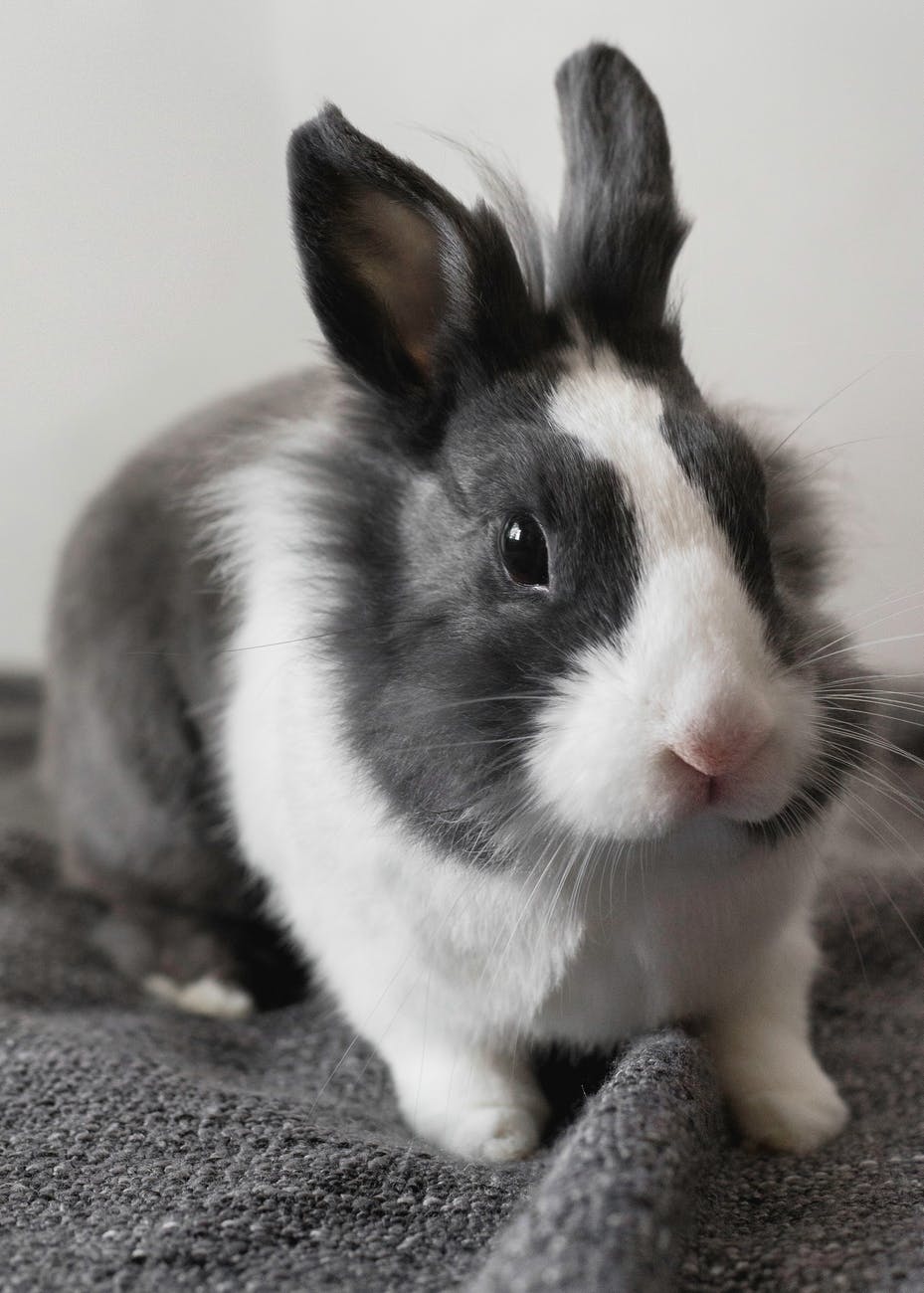
Today is International Rabbit Day,
a day to honour and learn about rabbits, both domestic and wild. In
that vein (see what I did there?), I thought I’d post about the most
fiendish vampire of all: Bunnicula!
Outwardly appearing like any other pet rabbit, Bunnicula strikes
terror in the hearts of other pets as he roams the house in the dead of
night, draining vegetables of their vital juices!
Can anything stop Bunnicula? Only time will tell…
Okay, Bunnicula is more fluffy than fiendish, but he’s still one of
my favourite vampires (from a cherished children’s book series of the
same name).
Are you a Bunnicula fan? What’s your favourite rabbit fact? Share in the comments…
If you prefer a good paperback to an ebook, order Love Lies Bleeding from Bookshop – a portion of each sale goes directly to independent bookstores, as well as to myself. Thank you for supporting indie! ♥