It’s World Goth Day today, so break out your black eyeliner and
Sisters of Mercy CDs, and head to the local cemetery for a discussion on
why we’re celebrating goths in May instead of the obvious choice of
October.
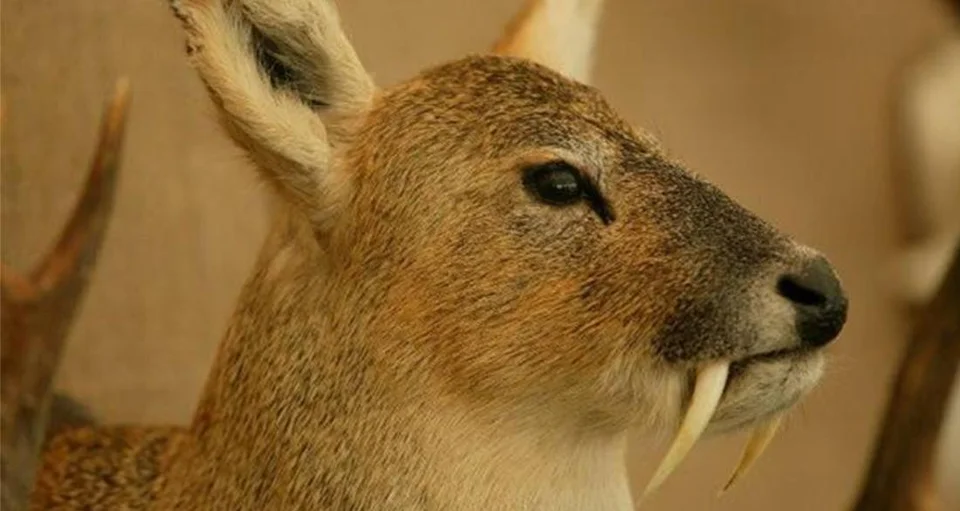
I thought I’d mark the day by sharing some pictures of real vampires I found. Enjoy!
If you prefer paperback, use this link to order Love Lies Bleeding from
Bookshop – a portion of each sale goes directly to independent
bookstores, as well as to myself. Thank you for supporting indie! ♥
Love Lies Bleeding‘s
readers know that main character Mara is both a vampire and a botanist.
Trained when she was still human, she continues to study plants and
have a garden. This post is fourth in a series exploring Mara’s plants.
Are you interested in botany, gardening, or plant lore? So are some
vampires…
Please note: Medicinal uses are given for informational purposes
only. Always consult a medical professional before diagnosing or
treating yourself or anyone else.
Latin Name:Hypericum perforatum
Common Names: St. John’s Wort, Tipton’s weed, goatweed, common St. John’s Wort, perforate St. John’s Wort, Balsamo (Greece)
History: Native to temperate Europe and Asia, St.
John’s Wort is now considered an invasive/noxious weed in more than 20
countries (it’s also toxic to livestock). Its use goes back to ancient
Greece and Rome, where is was used for snakebites, burns, wounds,
sciatica, and to treat recurring fevers, among other things. It was also
believed to protect against witches’ spells. Later, it was associated
with the Norse God of Light and Summer, Baldr, thanks to the plant’s
bright yellow flowers and tendency to bloom around the summer solstice
(21 June). Eventually 24 June became St. John’s feast day and the plant
was renamed. The flowering shoots were hung over doors and stalls to
ward off evil spirits, and to protect both people and animals from harm
and illness. In Greece it would be hung in homes over religious icons of
St. John, which led to its botanical name (hyper, meaning “above” and eikon, meaning “picture” or “icon.”)
Victorian Language of Flowers Meaning: Animosity
Cultivation: Perennial (Zones 5-7). Produces
creeping rhizomes and seeds–can be invasive (check with your local
authorities before growing St. John’s Wort). Can be easily grown in any
reasonable, well-drained soil; tolerates dry conditions. Prefers sun
(will tolerate part shade). Start seed indoors and transplant to a
permanent outdoor location after all danger of frost is past. Harvest
flowering shoots and dry to use later, or preserve fresh flowers and
buds in oil (see below). Because it spreads so easily, it can be readily
found growing wild in fields, near creeks, and by the sides of roads.
Uses:
Medicinal: Taken internally, St. John’s Wort has been shown to be
effective for mild to moderate depression and symptoms of menopause. Be
aware that supplements are not regulated and can vary widely in quality,
reliability, and efficacy.
Externally, the oily extract is used to heal wounds, bruises, and
various skin conditions. It can also be rubbed on sore muscles. Research
has found that hypericin, one of the plant’s chemical
compounds, has antibacterial and anti-inflammatory properties. Make your
own extract by filling a sterilized glass jar with flower buds and
flowers. Cover completely with olive oil (or other vegetable oil). Cover
the jar and leave on a sunny windowsill for about a month. Wipe away
any condensation that forms inside the jar. Oil should turn a deep red
colour. Strain to remove flowers. Store extract in a cool, dry place. If
mold develops while oil is steeping (usually because the plant material
isn’t fully covered or there’s too much moisture in the jar) discard
and start over.
You can also make a tea with fresh or dried flowers. Cool and apply
the tea to skin with a clean cloth or cotton pad. Use for wounds,
bruises, skin conditions, and burns. You can also drink the tea (hot or
cold) for its medicinal benefits, although beneficial effects will be
milder than from a supplement.
Caution: If you’re taking prescriptions (including
anti-depressants, heart medicine, and birth control pills), avoid using
St. John’s Wort internally, as it can interfere with absorption and
cause interactions. It can also cause photosensitivity–avoid sun
exposure entirely or cover up and wear sunscreen if you’re using St.
John’s Wort in any form. Don’t use St. John’s Wort if pregnant or
nursing.
Caution 2: If you’re taking St. John’s Wort for
depression and decide to stop, make sure to wean off it slowly by
gradually decreasing the dose. Stopping abruptly can have adverse
effects.
Possible Side Effects: Restlessness, insomnia,
nervousness, irritability, stomach upset, diarrhea, dizziness, headache,
skin rash and tingling. It can also cause vivid dreams.
Crafts: Alcohol extracts of the plant produce a deep red dye. Used
with different mordants, it can produce various shades on wool, silk,
and other fibres.
Mara’s Uses: Mara mentions Hypericum as a
plant worth studying for her blood substitute. It would also be part of
her apothecary business, added to tinctures and extracts for other
vampires to give their bloodletters (both to combat depression and to
heal wounds), as well as for to human customers.
If you prefer paperback, use this link to order Love Lies Bleeding from
Bookshop – a portion of each sale goes directly to independent
bookstores, as well as to myself. Thank you for supporting indie! ♥
Going with the flow of Awen and with the “Creativity comes with other
people” theme from my other post, I felt compelled to write this one!
I haven’t done a book review before and I am thrilled that my first is for my fellow blogger and friend, Aspasía S. Bissas’ novel ‘Love Lies Bleeding’.
Firstly, ‘Love Lies Bleeding‘ is a romance. I don’t do romance books, but this was a first. Ok, technically Dracula could be classed as one- alright, a love story!
Secondly, this is a story in a world that has vampires in it.
I love vampires. I especially love the modern version of vampires
being sexy, having cool powers and using blood drinking as a metaphor
for sex.
Our main protagonists are Mara and Lee. Mara’s a young (looking) vampire who is…
A few weeks back I posted about re-watching older seasons of Supernatural
in anticipation of seeing the last few seasons I’d missed, including
the series finale. I finally completed what occasionally felt like a
gruelling trek, and I thought I’d share a few final thoughts about the
show.
I actually almost didn’t make it to the end. The last season I’d seen involved a lot of sturm und drang
about Lucifer fathering a child with an unsuspecting human woman. That
season ended with baby Jack being born (and instantly aging up to a
young man), in the process opening a portal to an alternate–
apocalyptic– Earth. At this point, fan favourite Bobby is re-introduced
to the show, while other favourites are killed off, including Crowley
(RIP) and Castiel. Okay, I thought, this is going to be interesting.
Only it wasn’t.
Alternate Earth
I think the writers really didn’t know what to do with the alternate
Earth. Bobby and Charlie were brought back, but then nothing much
really happened with them (definitely nothing that added to character
development, the story arc, or to the show as a whole). There’s a
bizarre alternate Castiel who is (thankfully) quickly killed. New
characters are introduced and brought to Sam and Dean’s Earth in a side
plot that, along with these characters, went nowhere. Most were killed
or just disappeared, and in the last season any that were left were
wiped out of existence (more on that later). And then there was the
apocalypse. We already had an apocalypse season on Supernatural—
who decided we needed another one? And why did anyone think viewers
would care if angels were wreaking havoc on another planet? It was a
strange choice and mostly (I think) an excuse to bring back another
character no one asked for: (alternate) Archangel Michael.
Michael 2.0
Boredom with what had initially seemed like it would be an
interesting season soon turned to frustration. Not only did we have to
sit through an alternate world’s apocalypse, but we had to endure
human-hating angels led by apocalypse-obsessed alternate Michael. One
stupid decision after another leads to him showing up on Sam and Dean’s
Earth (which I’m calling Main Earth from now on), where Dean, going
against all sense and reason, ends up giving Michael permission to
possess him (AKA use him as a “vessel”) on the condition that Dean
remain fully in control. Of course Michael never has any intention of
keeping his word. Who could have foreseen this twist, other than
literally everyone? It feels like we’ve seen this exact story a thousand
times on Supernatural. Watching the characters make one dumb
move after another was intolerable, and this was where I almost walked
away from the show. I actually looked up series finale spoilers to find
out if there was any point to keep watching. Ultimately, I decided there
was, but if I had my way I’d purge this season, along with the “British
Men of Letters” one.
Side note: the final season sees the return of original Michael,
along with Sam and Dean’s half-brother Adam. Unlike alternate Michael,
this works well, as original Michael helps the story along and gives the
show a chance to tie up a longstanding loose end. And also unlike
alternate Michael, original Michael’s motives actually make sense.
The Writers VS. Jack
Instead of another apocalypse and alternate Michael, I really would
have preferred more of a focus on Jack. He was something new on Supernatural—
the son of Lucifer, and an incredibly powerful being in his own right
(more powerful than an archangel, according to the show). Or, at least,
he should have been. As with their treatment of Castiel,
the writers found every excuse to diminish his powers (right until the
very last episode). Who was this kid? Would he go full-on Damian at some
point? Would he team up with Lucifer, or destroy his father and become
the new Big Bad? Or maybe he’d beat the odds and side with good. So many
possibilities– so few opportunities taken by the writers. He did
exhibit a few abilities early on (like bringing Cas back from the dead),
but mostly it felt like we were perpetually waiting for Jack to do something.
Even when he lost his soul, it didn’t change much. Jack had so much
potential, but it was frustrating (there’s that word again) waiting for
him to reach it. Not that it wasn’t satisfying when he finally did, but
at that point it was verging on too little too late.
Abrupt Exits
To borrow a much-overused phrase from the show “I get it”: a lot had
to happen in the final season and we couldn’t necessarily have long
goodbyes with a lot of characters. But it was disappointing the way some
of them left. We’re lucky to have had a final visit with Rowena
(awesome witch, the new Queen of Hell, and one of my all-time favourite
characters), but too many other characters didn’t get more than a
passing mention. It would have been nice, for example, when Dean went to
heaven, to see someone other than (original) Bobby and, eventually,
Sam. Why not a quick cast reunion at the end? At least they could have
given us a final glimpse of Cas and Jack. And what happened to the
people from the alternate Earths (which, reminder: includes us, as
established in an earlier episode)?
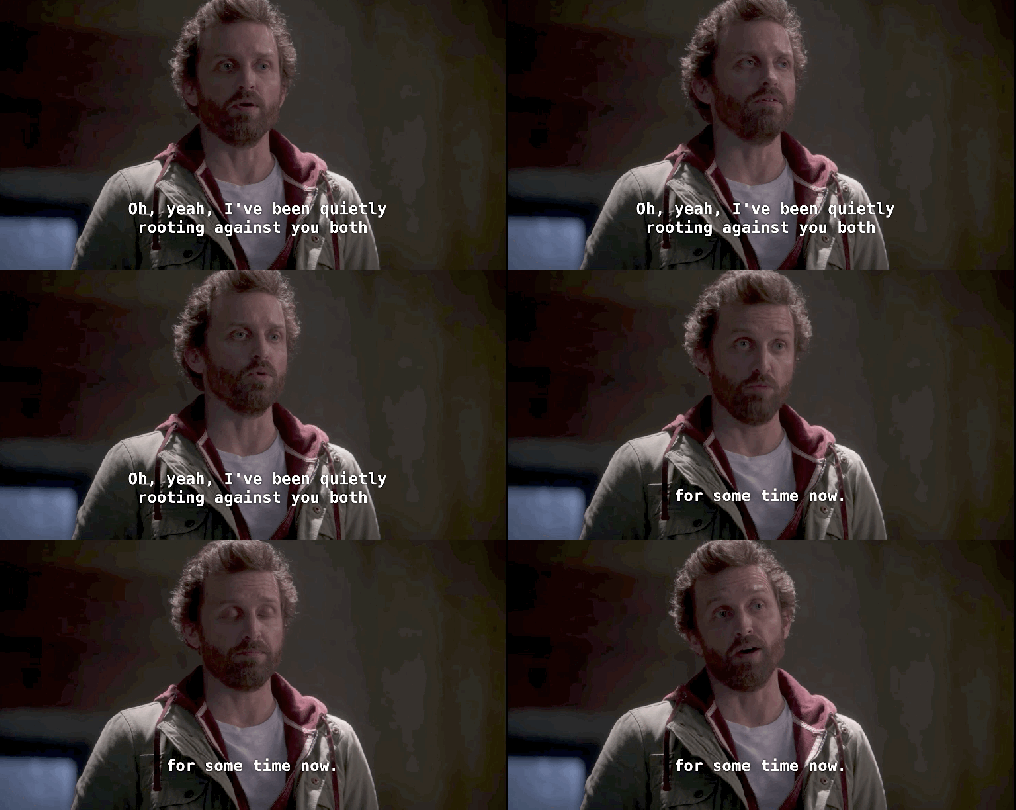
Chuck destroyed all the alternate Earths, and then wiped out nearly
everyone on Main Earth, including the people rescued from apocalypse
world. Jack eventually restores everyone on Main Earth, but he also
implies that he’s going to be sticking with just the one earth. Never
mind what ultimately happened to everyone on the alternate Earths, we
don’t even know what happened to alternate Charlie and Bobby, whether
they ended up anywhere or simply ceased to exist forever. All I’m saying
is a little closure would have been nice.
It wasn’t all poor choices and unanswered questions, though. The one
thing I think the show really got right in the final season was:
God as Villain
It probably created some controversy to make God (AKA Chuck) the
ultimate villain on the show, but I think it works. Let’s face it: from
his long absences (including during serious crises) and his lack of
interest in his creations, to his fits of cruel vengeance/punishments,
and his habit of playing favourites, God is half-villain already. Supernatural re-imagines
him as a hack writer who plays with people’s lives for his own
entertainment. He torments Sam and Dean (whom he claims are his
favourite “characters”) and “cancels shows” (destroys all the alternate
earths) because Sam and Dean don’t want to play along anymore. He wipes
out every person and animal on Main Earth just so he can watch how Sam,
Dean, and Jack will cope. When Dean is thrilled to discover a dog that
was somehow missed, Chuck wipes out the dog while watching Dean’s
reaction. His arrogance is ultimately his downfall, and when Jack
absorbs all of Chuck’s power, it’s the best possible outcome. Chuck is
left as a normal, powerless, human to live out his life and die;
meanwhile it’s pretty clear that Jack is going to make a superior God.
It’s a good end to the story arc and an interesting take on biblical
mythology. I think it was a fitting conclusion to the series.
So, is it worth watching Supernatural? It’s not the best show, but as I’m discovering watching some of what else is out there, it’s not the worst one, either. Supernatural
has multitudes of great characters, overall decent acting, a few really
creative episodes, and some solid writing and storylines. They even
managed to introduce a group of actually scary vampires in the last
episode. Better late than never.
What did you think of the end of Supernatural? Share in the comments…
Want to read something that’s all about the vampires? Get my books!
If you prefer paperback to an ebook, use this link to order Love Lies Bleeding from Bookshop – a portion of each sale goes directly to independent bookstores, as well as to myself. Thank you for supporting indie! ♥
I'm not exactly a fan of Supernatural, the long-running (and recently concluded) series featuring the monster-hunting Winchester brothers (Sam and Dean) and associates. I am, however, a fan of several of the characters, which is why I've stuck with the show. I'm currently re-watching older seasons in anticipation of catching up on the last couple I haven't seen yet, including the series finale.
The thing is, no matter how much I try (and I have tried), I just can't pretend this show doesn't bother me on numerous levels. I'm not trying to ruin anything for the fans out there (who I'm sure far outnumber detractors like me), but someone needs to say it. Supernatural has problems. Here's four of them.
"Librarians"
In season 8 Supernatural introduced the "Men of Letters," a secret society that, among other things, made a point of amassing and preserving vast stores of occult and magical knowledge. Sounds pretty cool, right? You'd think so, but apparently the show's writers disagree, as multiple characters repeatedly refer to the Men of Letters as "librarians." And it's never a compliment.
First of all, fiction is full of librarians who could hold their own in the Supernatural universe. Secondly, the show itself establishes that the Men of Letters were also men of action-- they just put a little more thought into their actions than the Winchesters and their fellow "hunters" tend to. More importantly, though, is that real-life librarians deserve better than this kind of casual derision. Yes, they spend an inordinate amount of time with books (not sure why that's a bad thing), but they also help people and improve lives on a daily basis (here's a story from last year as just one example). Librarian as an insult? You're only showing your own ignorance.
2. Mary Shelley Didn't Create Frankenstein
Season 10 brought us the ill-conceived Styne family, an ancient clan into all kinds of evil, including murder, Nazism, and really poorly stitched body modification (seriously, this is your thing-- learn how to sew). But-- big reveal-- it turns out the family's name was originally... Frankenstein (groan), and that their family friend Mary Shelley, after spending a few days at their estate and seeing what they were up to, wrote her book to try to warn the world. In other words, Frankenstein isn't a work of Shelley's vibrant imagination (and one of, if not the, first works of science fiction), but rather non-fiction based on something she witnessed.
Seeing as how women writers throughout history have been consistently ignored, suppressed, forgotten, and denied credit, for Supernatural to come along and discount the achievement of one of the few who did receive her due... let's just say that Supernatural owes Mary Shelley a huge apology.
3. The Writers vs. Castiel
Introducing angels to the show is generally acknowledged as being one of Supernatural's smarter moves. Castiel especially turned out to be a great character, with some decent development over the seasons. Unfortunately, the writers backed themselves into a corner with angels. Debuted as incredibly powerful beings who can destroy a human just by existing in their natural state, the writers subsequently were forced to find ways to make angels far weaker than they started out. As the Winchesters' protector/friend Castiel gets the brunt of this-- the writers spend the rest of the series finding excuses to take away his power. Poor Cas loses his mind, gets stuck in purgatory, is put under the control of another angel, and even becomes human, among other things. Even when he is at full strength, the writers ignore the extent of his abilities, inexplicably render them useless ("I can usually heal anything, but not this..."), or simply pretend he doesn't exist. He can be summoned by phone or by prayer, yet he often "isn't answering," or more often, the Winchesters don't bother calling. There are so many times when Cas could easily have dispatched demonic enemies or fixed an unfortunate situation (like, say, bringing Charlie back to life), but it's inconvenient to the story, so he's nowhere to be seen. What all this amounts to is a lot of poor and/or lazy writing that ultimately lowers the quality of the show. F for effort, guys.
4. Sucky Vampires
Vampires aren't the focus of Supernatural, and it's a good thing because the ones on this show are awful. From the hideous rows of fangs to their bland personalities, I have to wonder why the show bothered including vampires at all. Mercedes McNab, who brilliantly played student-turned-vampire Harmony on Buffy and Angel, shows up as a vampire in one season 3 episode of Supernatural. Her character mostly spouts exposition and whines about being hungry before Dean finally beheads her. Other vampires throughout the series are similarly unremarkable (although there was one storyline that had potential, about vampires taking advantage of the Twilight craze, but it ultimately missed the mark). Even Benny, who befriends Dean in season 8 and actually gets a story arc, serves mostly as a source of tension between Sam and Dean. Not every vampire is going to be a Dracula or a Spike, but it takes some skill to make all of yours forgettable.
There are other problems with Supernatural (like Sam and Dean's casual willingness to murder innocent people just because they're possessed-- remember when they used to at least try an exorcism first?), but I'll leave it here. What do you think? Do you agree or disagree with my points? Share in the comments...
Want to read something that's all about the vampires? Get my books!
If you prefer a good paperback to an ebook, use this link to order Love Lies Bleeding from Bookshop – a portion of each sale goes directly to independent bookstores, as well as to myself. Thank you for supporting indie! ♥