Gift giving season is upon us and if that’s something you’re into, may I just point out that Love Lies Bleeding
makes an excellent gift for book- or vampire-loving friends, loved
ones, and distant acquaintances (not to mention the good karma you’ll
get for supporting independent authors!)
If you’ve already read and enjoyed any of my books, could you please
take a minute now to leave a rating or review (links below)? It’ll help
keep your stocking coal-free…
Love Lies Bleeding‘s
readers know that main character Mara is both a vampire and a botanist.
Trained when she was still human, she continues to study plants and
have a garden. This post is seventh in a series exploring Mara’s plants.
Are you interested in botany, gardening, or plant lore? So are some
vampires…
Please note: Medicinal uses are given for informational purposes
only. Always consult a medical professional before diagnosing or
treating yourself or anyone else.
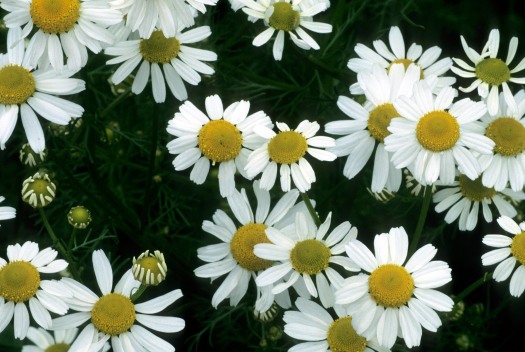
Botanical Name:Matricaria chamomilla (German chamomile) and Chamaemelum nobile (Roman or English chamomile).
Common Names: chamomile, camomile, German chamomile, Italian chamomile, Hungarian chamomile, wild chamomile, scented mayweed, Matricaria recutita, Roman chamomile, English chamomile, garden chamomile, Water of Youth, ground apple, mother’s daisy, whig plant, Anthemis nobilis, Anthemis, chamomilla, Flores Anthemidis, Grosse Kamille, Romische Kamile, manzanilla, sweet chamomile
History: Found near populated areas throughout
temperate parts of the world, chamomile will grow in any disturbed soil,
including along roadsides, near landfills, and in cultivated fields. It
has been used medicinally since at least Ancient Egypt, and in beer
making (and love potions!) since the Middle Ages. Roman chamomile was
thought to be the superior form, hence the use of “nobile” (noble) in
its botanical name, although research shows that German chamomile is
actually the more potent of the two. Chamomile is the national flower of
Russia.
Victorian Language of Flowers Meaning: Patience
Cultivation: Zones 3 to 9. German chamomile is an
annual that readily self seeds. Roman chamomile is a perennial.
Chamomiles like moist but well-drained soil and full sun (or part shade
in hotter climates). Start seeds six weeks before last frost. Seeds need
light to germinate, so scatter on top of potting mix, press firmly into
the mix, and keep moist. Transplant outside after risk of frost has
passed. (You can also directly sow seed outdoors in autumn.) Thin plants
to 15 to 18 inches (38 to 45 cm) apart. Blooms June and July. After
(Roman chamomile) plants flower, cut them back to soil level to ensure
strong plants next season.
Uses:
Medicinal: Whichever type of chamomile you use, make a tea from the
flowers and drink or apply externally, depending on what you’re
treating. German chamomile in particular has been found to be
antispasmodic and anti-inflammatory, making it ideal for menstrual and
intestinal cramps, as well as coughs and colds. Chamomile is calming and
has been traditionally used to help anxiety and insomnia. Cooled tea
can be applied to skin to calm irritations and help with swelling (it
can also be used as a mouth rinse for sores or inflammation). You can
make a pot of strong tea and add it to bath water for a healing bath.
Chamomile is a mild laxative, but has also been found to help treat
diarrhea in children.
Caution: Chamomile can cause allergic reactions in anyone allergic to pollen or plants in the ragweed family. Chamomile may also negatively interact with other herbs and medicines. Avoid using if you’re taking anti-coagulants, NSAIDS, or sleep aids (including herbal kinds).
Caution 2: Pregnant and nursing women are advised to
avoid using Roman chamomile. Infants should not be given chamomile, as
(like honey) it may be contaminated with botulism spores, which a baby’s
immature immune system can’t handle.
Cosmetics: Chamomile extract or essential oil can be added to skin
creams as a soothing ingredient. Cooled chamomile tea can be used as a hair rinse to bring out blond highlights. Chamomile can also be added to homemade bath products, such as bath bombs.
Food: Home brewers can use the entire chamomile plant to add bitterness to beer. Chamomile flowers can be used in drinks (lemonade, smoothies, cocktails), in homemade popsicles, or in baking and other desserts. The flowers have a sweet apple or pineapple scent, and are worth experimenting with.
Crafts: Chamomile makes a nice addition to potpourri.
You can also scent your home by gently simmering chamomile (fresh or
dried leaves and/or flowers) in a pot of water on the stove (do not
leave unattended; keep a close eye on water levels).
Gardening: Prevent damping off in seedlings by watering them with
cooled chamomile tea. Planting chamomile near sick plants often results
in healthier plants.
Mara’s Uses: Mara orders a cup of chamomile tea in Blood Magic (download your free copy here). Chamomile would also be included in remedies she sells via her apothecary business in Love Lies Bleeding, as well as the ones she used to help her fellow passengers in Tooth & Claw (download your free copy here).
If you prefer paperback, use this link to order Love Lies Bleeding from
Bookshop – a portion of each sale goes directly to independent
bookstores, as well as to myself. Thank you for supporting indie! ♥
‘Tis the time of year for ghouls and monsters and vampires, so I
thought I’d share this short piece again, for those of you who haven’t
read it (or who feel like re-reading it). Enjoy!
Note to the reader: the following text is transcribed from a document
found in the crawlspace of an old row house in Montreal, Quebec. The
owner of the building sent it to a local historical association, who are
now sharing it in hopes that someone might have more information.
Interview with "Mara," a young woman who claims to be
a vampire
By J.S., editor at large
April 5, 1918.

J.S.: Could you please state your name for the record?
M: You can call me Mara.

J.S.: Is that your real name?
M: Real enough. It's the only one I have left.

J.S.: Could you tell me what you said when we met
earlier tonight?
M (does not reply)

J.S.: When we met, I asked what a young lady was doing
out alone in the middle of the night. How did you
respond?
M (smiles): I told you that I am a vampire.

J.S.: A vampire--like Mr. Stoker's Count Dracula?
M: As far as I know, he is fictional. I am not.

J.S.: What would you say to those who don't believe in
such creatures as vampires?
M: Your lack of belief doesn't make me any less real.

J.S.: How long do you claim to have been a vampire?
M: Most of my life.

J.S.: How long is that?
M: Isn't it impolite to ask a lady her age?

J.S.: Do you drink blood?
M: Of course.

J.S.: Where do you get it?
M: Wherever I can find it.

J.S.: From animals?
M: No.

J.S.: Do you have a reflection?
M (gets up and walks to the lavatory. She stares into
the mirror over the sink): It would seem so.

J.S.: Can you turn into a bat?
M (does not reply)

J.S.: How many other vampires are there?
M: More than your kind would care to consider.

J.S.: My kind? You mean mankind? Human beings?
M: Yes.

J.S.: Do you pay attention to human events? What do you
think of the Great War?
M: I wish I could be there, in the thick of it.

J.S.: Do you mean as a nurse?
M (laughs)

J.S.: Why do you want to be at the front? Isn't it
dangerous?
M: The danger is why. It's all death and chaos.
People die, people go missing--no one gives it
a second thought. Vampires do well in times of war.

J.S.: If that is the case, why aren't you there?
M: Someone else is there. He's looking for me. I do
not wish to be found.

J.S.: Who is there?
M: You should worry about the illness instead of
my acquaintances.

J.S.: The illness? Are you referring to the
Spanish Flu? There are rumours of epidemic.
M: The rumours are correct--the influenza is
spreading rapidly. I can smell it in the air.

J.S.: You can smell it? That must be handy.
M: It helps us to choose.

J.S.: What do you mean by 'choose'?
M: Most of us prefer blood from healthy specimens.

J.S.: And the rest?
M: We find those who don't have long. Some consider it
a kindness.

J.S.: Why are you telling me this?
M (does not reply)

J.S.: I don't have the Flu.
M: No, you have something deeper. In your bones.

J.S.: Oh, really? What does that smell like?
M: Like sour chalk and dry rot.

J.S.: Rot is right. You expect me to believe such
nonsense?
M: What about that ache that never seems to go away?
It's been getting worse, hasn't it?

J.S. (reluctant to respond)

J.S.: I have an appointment to see a doctor.
M: He won't be able to help you.

J.S.: How do you know?
M: They rarely can.

J.S.: Then what can anyone do for me?
M: I could prescribe you herbs, but they won't help,
either.

J.S.: A vampire and an apothecary? That is quite the
combination.
M: I learned my trade young and found that it
pays to keep humans healthy.

J.S.: Is that it, then? All you can offer are
ineffectual balms?
M: I can also offer you a kindness.

J.S.: You mean death.
M: Some prefer it to suffering.

J.S.: What if I refuse?
M: It's your choice. You have time to decide,
but not much.

J.S.: Where are you going?
M: I have other business to attend to. I'll return
in a fortnight. Tell me then what you've decided.

J.S.: Will it hurt?
M: I can make it so it doesn't.

M leaves and I finish recording our exchange.
I don't know why, perhaps for posterity.

I am unsure how to proceed.
Want to read more about Mara? Download my books now….
If you prefer paperback, use this link to order Love Lies Bleeding from
Bookshop – a portion of each sale goes directly to independent
bookstores, as well as to myself. Thank you for supporting indie! ♥
A quick update today to let people know where they can find me
online. I post different things on different sites, so feel free to
follow me in as many places as you like. See you around…
AspasiaSBissas.com:
My official site is the best place to find info about me and my books, news,
reviews, events, posts, and random fun bits. You can also subscribe to
my posts or sign up for occasional email updates.
Love Lies Bleeding‘s
readers know that main character Mara is both a vampire and a botanist.
Trained when she was still human, she continues to study plants and
have a garden. This post is sixth in a series exploring Mara’s plants.
Are you interested in botany, gardening, or plant lore? So are some
vampires…
Please note: Medicinal uses are given for informational purposes
only. Always consult a medical professional before diagnosing or
treating yourself or anyone else.
Botanical Name:Achillea millefolium
Common Names: Common yarrow, sanguinary, bloodwort, plumajillo
(“little feather”). nosebleed plant, old man’s pepper, devil’s nettle,
milfoil, soldier’s woundwort, thousand-leaf, staunchweed, arrowroot,
field hops, woundwort. An old name for Yarrow is herba militaris.
History: Native to temperate regions of the Northern
Hemisphere, yarrow has now spread around the world, growing freely
along roadsides and coastal areas and in fields and meadows. It’s been
used medicinally since prehistoric times, including by Neanderthals.
Ancient Hellenes (Greeks) used it to stop bleeding from wounds (the name
Achillea comes from the hero Achilles, who supposedly took
yarrow into battle to treat his soldiers). Indigenous tribes throughout
North America used the herb medicinally for pain relief, fever
reduction, and as a sleep aid, among other things. In the Middle Ages it
was used along with other herbs to flavour beer before hops became
prevalent (it’s still used in beer-making in Sweden). In the Hebrides it
was believed that holding a leaf against the eyes would bestow second sight. In China the dried stalks have been used for centuries in divination.
Victorian Language of Flowers Meaning: Healing, protection
Cultivation: Perennial in Zones 2 to 8. Yarrow is
ideal for native plant gardens, drought tolerant gardens, and wildlife
gardens. Prefers full sun and well-drained soil, but is tolerant of many
conditions. Can grow up to 1 metre (approx. 3 feet). Seeds require
light, a moist environment, and cool temperatures to germinate, so sow
outdoors, barely covered by soil, after the last frost date; or start
indoors 6 to 8 weeks before last frost date and keep moist but not wet
(it might be easier simply to buy plants or propagate by division).
Spreads via rhizomes and can become invasive. Plant (or thin seedlings
to) 30 to 46 cm (12 to 18″) apart. Once plants are established they need
little watering and no fertilizing, although they can be prone to
powdery mildew (giving plants adequate space around them for good air
circulation will help prevent this). Flowers from May to July, and
sometimes into autumn. Divide plants every other year in spring. Yarrow
is considered an excellent companion plant, repelling pest insects while
attracting beneficial insects, like predatory wasps, lacewings, and
hoverflies.
Uses:
Medicinal: Astringent, anti-microbial, and anodyne.
Drink tea made from the flowers to stop bleeding, for muscle aches and
cramps, to reduce fever, for an upset stomach, or to help you sleep.
Cooled tea makes an astringent facial wash (good for oily skin and skin
infections/irritations). A salve or balm made from yarrow is useful on wounds, bruises, swelling, and various skin problems.
Fresh leaves can be crushed or bruised and applied directly to
wounds. For nosebleeds, pick a few leaves, rub between your hands to
bruise slightly, roll into a plug, and insert gently into the bleeding
nostril. Leave in place until bleeding stops.
Culinary: Yarrow leaves and flowers have a flavour reminiscent of
anise or licorice, and are somewhat bitter. Use fresh or dried as a
herbal seasoning for food, or mix with other culinary herbs like
tarragon and parsley. Can eat the greens fresh (use like sprouts or baby
salad greens). Steam or blanch leaves and enjoy like other cooked
greens. Don’t cook yarrow for long or at a high heat, as cooking
destroys its delicate flavour and brings out the bitterness (especially
when boiled). Yarrow is a nice addition to desserts, in sorbet and ice
cream, or sprinkled over fresh fruit. Yarrow is also used to make some
liquors and bitters.
Environmental: Can be planted to combat soil erosion.
Caution: Yarrow is toxic to dogs, cats, and horses.
Do not let them consume the plant in any form. In humans, yarrow can
cause allergic skin reactions and photosensitivity (avoid sun exposure
when using yarrow). Avoid if you’re pregnant or breast feeding.
Wildlife: Many insects feed on yarrow, including
nearly 50 species of moths. Several species of cavity-nesting birds use
yarrow to line their nests (possibly because it inhibits the growth of
parasites).
Mara’s Uses: Mara mentions Yarrow as a potential ingredient for her theoretical blood substitute: “Bloodwort, Sanguinary–that’s Achillea…” (Love Lies Bleeding, p. 156). Yarrow would also be included in the remedies she sells via her apothecary business.
If you prefer paperback, use this link to order Love Lies Bleeding from
Bookshop – a portion of each sale goes directly to independent
bookstores, as well as to myself. Thank you for supporting indie! ♥
It's probably safe to say that most of us in English-speaking countries are familiar with Bram Stoker’s Dracula. If we haven't read the book, we know the character, and it's likely we've seen at least one adaptation. But how do other countries view the Count?
Drácula, a 1931 Spanish film adaptation of Stoker’s work, was filmed at night using the same sets as the 1931 English version
starring Bela Lugosi. Because the Spanish crew got to see the English
dailies every night, they had a chance to adjust camera angles and other
details to produce what many fans believe is a superior film.
Japan: Evil of Dracula
Evil of Dracula
Toshio Kurosawa in Evil of Dracula.
Evil of Dracula (original title: Chi o suu bara “Bloodsucking
Rose”) is the third part of a Japanese trilogy, known as the
Bloodthirsty Trilogy, of Dracula adaptations (some more loosely adapted
than others). In this version, the vampire bites his victims on the
breast, rather than on the neck (hey, it was the 70s).
South Korea: Dracula, the Musical
Dracula, The Musical, poster in Seoul
Dracula, The Musical, debuted in South Korea in 2014, starring Kim Jun-su in the titular role. Although based on a 2004 Broadway musical, the Korean version seems uniquely their own. This post
has plenty of photos and info, including lyrics to one of the songs.
Anyone else think North America could use a rebooted musical Dracula, including the pink hair?
South Africa: Dracula Adult Panto
Another stage adaptation, Dracula Adult Panto
brings the gender-bent Count(ess) to South Africa, along with a dash of
humour and an LGBT+ twist. At the end of the show, the venue transforms
into a dance floor, and attendees spend the rest of the night partying.
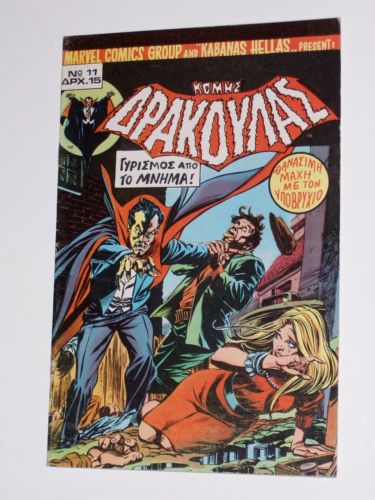
Greece: Tomb of Dracula aka Κόμης Δράκουλας
Tomb of Dracula, Greek version
Not a unique adaptation, but I thought the Greek edition of Marvel’s Tomb of Dracula
was worth a share. Interestingly, in Greek his title can translate to either
Count or Earl (you’ve heard of Earl Grey–now tremble before Earl
Dracula!) I wish my parents had thought to pick me up a few copies of
these when I was a kid; alas, my Greek-language education
remained pitifully vampire free.
Which is your favourite non-English version of Dracula? Is there
another one you think I should know about? Share in the comments…
Cheers,
Aspasia S. Bissas
(Originally posted on my official website: https://aspasiasbissas.com/2019/05/26/world-dracula-day/ for World Dracula Day, Please like and follow there.)
Check out the last podcast of the season, where I ponder whether
writing what you know is really the best approach. What are your
thoughts? Share in the comments….
You can give it a listen right here, or follow this link to find out where else my podcast is available. Subscribe for free and keep an eye out for Season 2!