One of the many repercussions of the pandemic here in Canada (and
most likely everywhere else too) is a shortage in our blood supply.
Blood and blood components are needed to help people with various
medical conditions (including those with blood cancers), for surgery,
and for emergency situations, like during childbirth or after a car
accident. When there isn’t enough blood to go around, the consequences
are devastating. So today’s post is to ask you to please consider
donating blood, if you can. You’ll be rewarded with the warm sense of
having done some good in the world (and a cookie). Your local vampires
would approve
Chances are when you think of vampires you’ll think of Eric Northman,
Drusilla, Barnabas Collins, or any of the other fanged
creatures-of-the-night that populate modern culture, including Mara from
Love Lies Bleeding.
The vampires we’re familiar with are (generally) human looking,
powerful, often charismatic and attractive, with a thirst for blood and a
dislike of stakes. But that wasn’t always the case. History and
folklore are full of vampires that are nothing like what we’ve come to
expect. Here are five examples…
Also known as vetaal or baital, the vetala is a blood-drinking demon
in Hindu mythology that haunts burial grounds and crematoria, hangs
upside down (like a bat) from trees, and possesses dead (or occasionally
living) humans or animals. Not unlike the vampires on Buffy,
the demon sets up shop in the body it’s possessing, while the original
soul that inhabited said body is “completely gone.” Unlike the vampires
of Buffy, the vetala retains none of the memories of the person
it’s possessing. As well, destroying the body doesn’t destroy the
demon, which simply moves on to the next handy body. Vetala are chaotic,
revelling in the damage they cause, including driving people insane and
killing children. Interestingly, some vetala are not evil; there’s even
a Disney Channel series in India where a harmless vetala is friends with a boy. It’s also possible that Bram Stoker was inspired by tales of vetala before he wrote Dracula.
There’s some debate about what revenants actually are. It has been
argued that they are a type of vampire, zombies, or simply generic
undead. Since the word itself means “one who returns,” it could refer to anything from a ghost to (technically) someone coming back from a long trip. Augustin Calmet
wrote in the 18th century that revenants were created by sorcerers “who
sucked the blood of victims.” Most historical accounts agreed that
revenants are caused by the restless spirits of wicked people
re-animating their corpses. Whatever a revenant is, stories show a
number of similarities with classic vampires, from their bodies being
swollen with blood (usually from gorging on it); to only being able to
move about at night; to needing their heads and/or hearts removed and
destroyed in order to finally stop them. Illness and death almost always
follow in a revenant’s wake. While vampires are said to require blood
as sustenance, a revenant doesn’t need the blood it consumes. Another
difference is that revenants, unlike vampires, decompose.
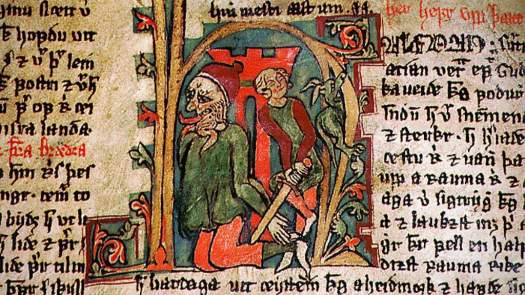
Draugr
Draugr (or draug, pl. draugur, AKA aptrganga) is essentially a Norse
revenant. Unlike other revenants, draugur can increase their size at
will, are motivated by treasure (as well as revenge and the general
desire to do damage), and are not affected by sunlight (although they
prefer the dark). Draugur have magical abilities and can shape shift
(one form they were known to take was a cat that would sit on a sleeping
person’s chest, getting steadily heavier until the victim suffocated).
They can also rise from their graves as wisps of smoke or pass through
solid rock. Draugur can enter the dreams of the living, leaving a “gift”
as assurance that they were really there. Draugur kill their victims
(both human and animal) by draining their blood, but can also kill by
crushing, devouring, or driving their victims mad. They were also
thought to run animals to death by chasing or riding them. They can be
killed via burning, dismemberment, destruction of the body, or simply by
eventual decay.
(AKA Aizhakos) A pagan shaman on trial during the Hungarian
Inquisition described a demon called Izcacus (meaning blood drinker),
which could be called forth to destroy the enemies of the pagans. The
name has ancient Turkish roots, and may have been originally spread by
migrating tribes who were themselves influenced by the Assyrians.
Specific information on the Izcacus is hard to find, but if it does have
roots in Assyrian vampire beliefs, it could (like other Assyrian
vampires) be a violent, merciless spirit or demon that devours its
victims’ blood and flesh.
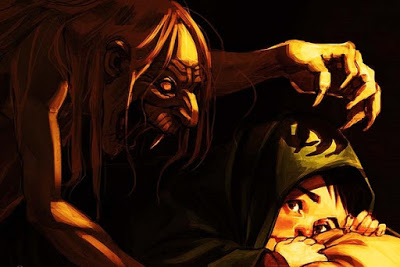
Originating in Spain, the guaxa (AKA guaja or guajona) is an ancient
vampire resembling an old hag (think stereotypical witch) with bright
eyes and bird legs (any relation to Baba Yaga?)
She sucks blood (preferably from children) with her single long
tooth/fang. The guaxa sneaks into homes at night through keyholes and
chimneys, and slowly drains victims over the course of weeks, causing
them to waste away. Unlike most vampires, they are born, not turned. One
source
claims that the guaxa’s weaknesses include silver, antlers, running
water, and magical amulets, but I couldn’t find any corroborating
sources, so it may not be accurate.
Have you heard of these vampires? Which do you think is scariest? Tell me in the comments…
If you prefer paperback to an ebook, order Love Lies Bleeding from Bookshop – a portion of each sale goes directly to independent bookstores, as well as to myself. Thank you for supporting indie! ♥
Love Lies Bleeding‘s
readers know that main character Mara is both a vampire and a botanist.
Trained when she was still human, she continues to study plants and
have a garden. This post is eighth in a series exploring Mara’s plants.
Are you interested in botany, gardening, or plant lore? So are some
vampires…
Please note: Medicinal uses are given for informational purposes
only. Always consult a medical professional before diagnosing or
treating yourself or anyone else.
COVID-19 Note:
Read more of the WHO’s coronavirus/COVID-19 advice here.
Botanical Name:Allium sativum
Common Names: Ajo, Allium, Clove Garlic, Camphor of
the Poor, Poor Man’s Treacle, Stinking Rose, Serpent Garlic, Spanish
Garlic, Common Garlic
History: Native to Central Asia, garlic has
naturalized in many areas and can even be a weed in some places. Garlic
has been used in food, medicine, and in religious rituals for thousands
of years. Ancient Greeks left it at crossroads as an offering to the
Goddess Hekate. Medieval European folklore claims that garlic can be
used to repel demons, vampires, and werewolves. Historically, garlic has
been used to improve strength and endurance; to treat snake bites,
arthritis, and respiratory illnesses; as a cure-all; and as an
antibiotic (it was used in both World Wars to prevent gangrene in
wounds).
Victorian Language of Flowers Meaning: Courage, strength, or as a ward against illness or “evil spirits” (unwanted suitors).
Cultivation: Perennial. Hardy in Zones 4 to 9, but
can be grown in Zone 3. Prefers full sun and loose, dry, well-drained
soil high in organic matter. There are two sub-species of garlic: hard
necked and soft necked, as well as hundreds of varieties and cultivars.
Hard-neck garlic generally grows in cooler climates and produces larger
cloves; soft-neck varieties are smaller and tend to be grown in hotter
climates. Garlic can be grown year-round in milder climates. In colder
climates, plant individual cloves about 6 weeks before the ground
freezes. To plant, loosen soil to a depth of 8 inches and plant cloves
(pointy end up) 3 to 4 inches deep. Garlic can be planted close together
(as long as there’s room for the bulb to mature) and can also be grown
in pots. Cover planting area with about 6 inches of straw to help
protect the cloves over the winter. Harvest in late spring or early
summer. Garlic bulbs are susceptible to a few diseases, as well as to leek moth (AKA onion leaf miner).
Uses:
Culinary: The bulb and scapes
are edible and used in a wide variety of savoury (and some sweet)
dishes. The flowers are also edible, although they have a much milder
flavour than the bulb or scapes. Immature (or “green”) garlic can be
pulled and used like scallions. Black garlic is heat aged over several
weeks to create a subtle sweet flavour that can be slathered on bread or
added to vinaigrettes and sauces. Garlic can be dried or stored in
vinegar, but storing in oil can result in botulism poisoning (see below
for link on safely storing and preserving garlic).
Traditionally served as a sauce with fish or roast meat, skordalia is
also good as a dip with vegetables, french fries, and pita bread
triangles.
2-3 medium to large potatoes, peeled, and cut in half
10 large cloves garlic, minced or grated finely
scant 1/4 cup white vinegar
1/2 teaspoon salt
1/4 cup olive oil (or vegetable oil for a milder flavour)
1/2 cup reserved cooking water (optional)
Place potatoes in medium saucepan over high heat. Add enough water to
cover. Bring to boil and lower heat to medium. Cook until potatoes are
soft (about 30 minutes). Drain potatoes, reserving cooking water. Leave
potatoes in saucepan and mash. You should have about 2 cups of mashed
potatoes. Add minced garlic to mashed potatoes. Add vinegar and salt,
stirring briefly after each addition. Add oil. Stir well. If serving as a
dip, no further additions are necessary. If serving as a sauce, add
reserved cooking liquid, a little at a time, until desired consistency
is reached. Serve at room temperature. Note: This keeps well
refrigerated for 4-5 days.
Makes 6 to 8 servings
Tip: Garlic breath can be most effectively minimized by drinking
milk with the garlic (it doesn’t work if you drink milk afterwards or
with skim milk).
Companion planting: Garlic is said to repel rabbits and moles, and to improve roses when planted near them.
Mosquito repellent: Anecdotal evidence suggests that eating garlic
makes you less attractive to mosquitoes. Research shows that garlic may
repel ticks, although not as well as commercial tick repellents.
Crafts: You can braid soft-neck garlic (see link below).
Medicinal: Garlic supplements vary widely in quality and efficacy–
make sure to buy one (preferably enteric coated to protect the
stomach) from a reputable manufacturer. Cooking garlic may remove some
of its medicinal benefits, while raw garlic can cause indigestion or
gastrointestinal distress, although black garlic retains its medicinal
benefits without causing irritation. Garlic is most commonly used to
boost immunity against infection, for lowering cholesterol, to prevent
atherosclerosis, and to both prevent and help recover from heart attacks
and other cardiovascular diseases. Research has shown that it may lower
your chances of developing some kinds of cancer.
Caution: Don’t take garlic supplements if you’re taking
anticoagulants (blood thinning medication) or have a clotting disorder.
Garlic can also interfere with some medications, including some
antibiotics and hypoglycemic drugs. Avoid taking garlic medicinally
while pregnant or breastfeeding.
Caution 2: Applying raw garlic to the skin can cause burns, especially in children.
Mara’s Uses: Mara does not use garlic in any form because it is toxic to her and other vampires (find out why in Love Lies Bleeding).
Blood from humans who take garlic supplements is unpalatable to
vampires. Blades are sometimes coated in garlic oil as a way of
exacerbating a vampire’s wounds.
If you prefer paperback, use this link to order Love Lies Bleeding from
Bookshop – a portion of each sale goes directly to independent
bookstores, as well as to myself. Thank you for supporting indie! ♥
It’s that time of year again– the Smashwords end-of-year e-book sale has begun! Get Love Lies Bleeding for half off (and as usual, Blood Magic and Tooth & Claw
are free)! The holidays are a great time to catch up on your reading
(or maybe even complete a challenge). Download my books and get started
right now….
Gift giving season is upon us and if that’s something you’re into, may I just point out that Love Lies Bleeding
makes an excellent gift for book- or vampire-loving friends, loved
ones, and distant acquaintances (not to mention the good karma you’ll
get for supporting independent authors!)
If you’ve already read and enjoyed any of my books, could you please
take a minute now to leave a rating or review (links below)? It’ll help
keep your stocking coal-free…
Love Lies Bleeding‘s
readers know that main character Mara is both a vampire and a botanist.
Trained when she was still human, she continues to study plants and
have a garden. This post is seventh in a series exploring Mara’s plants.
Are you interested in botany, gardening, or plant lore? So are some
vampires…
Please note: Medicinal uses are given for informational purposes
only. Always consult a medical professional before diagnosing or
treating yourself or anyone else.
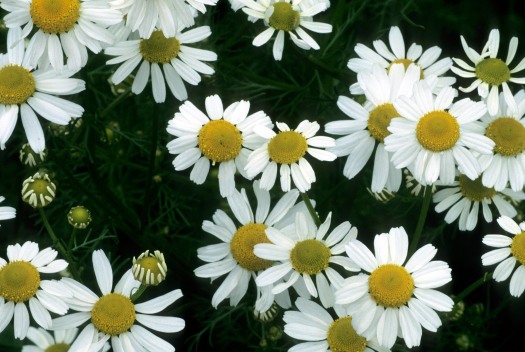
Botanical Name:Matricaria chamomilla (German chamomile) and Chamaemelum nobile (Roman or English chamomile).
Common Names: chamomile, camomile, German chamomile, Italian chamomile, Hungarian chamomile, wild chamomile, scented mayweed, Matricaria recutita, Roman chamomile, English chamomile, garden chamomile, Water of Youth, ground apple, mother’s daisy, whig plant, Anthemis nobilis, Anthemis, chamomilla, Flores Anthemidis, Grosse Kamille, Romische Kamile, manzanilla, sweet chamomile
History: Found near populated areas throughout
temperate parts of the world, chamomile will grow in any disturbed soil,
including along roadsides, near landfills, and in cultivated fields. It
has been used medicinally since at least Ancient Egypt, and in beer
making (and love potions!) since the Middle Ages. Roman chamomile was
thought to be the superior form, hence the use of “nobile” (noble) in
its botanical name, although research shows that German chamomile is
actually the more potent of the two. Chamomile is the national flower of
Russia.
Victorian Language of Flowers Meaning: Patience
Cultivation: Zones 3 to 9. German chamomile is an
annual that readily self seeds. Roman chamomile is a perennial.
Chamomiles like moist but well-drained soil and full sun (or part shade
in hotter climates). Start seeds six weeks before last frost. Seeds need
light to germinate, so scatter on top of potting mix, press firmly into
the mix, and keep moist. Transplant outside after risk of frost has
passed. (You can also directly sow seed outdoors in autumn.) Thin plants
to 15 to 18 inches (38 to 45 cm) apart. Blooms June and July. After
(Roman chamomile) plants flower, cut them back to soil level to ensure
strong plants next season.
Uses:
Medicinal: Whichever type of chamomile you use, make a tea from the
flowers and drink or apply externally, depending on what you’re
treating. German chamomile in particular has been found to be
antispasmodic and anti-inflammatory, making it ideal for menstrual and
intestinal cramps, as well as coughs and colds. Chamomile is calming and
has been traditionally used to help anxiety and insomnia. Cooled tea
can be applied to skin to calm irritations and help with swelling (it
can also be used as a mouth rinse for sores or inflammation). You can
make a pot of strong tea and add it to bath water for a healing bath.
Chamomile is a mild laxative, but has also been found to help treat
diarrhea in children.
Caution: Chamomile can cause allergic reactions in anyone allergic to pollen or plants in the ragweed family. Chamomile may also negatively interact with other herbs and medicines. Avoid using if you’re taking anti-coagulants, NSAIDS, or sleep aids (including herbal kinds).
Caution 2: Pregnant and nursing women are advised to
avoid using Roman chamomile. Infants should not be given chamomile, as
(like honey) it may be contaminated with botulism spores, which a baby’s
immature immune system can’t handle.
Cosmetics: Chamomile extract or essential oil can be added to skin
creams as a soothing ingredient. Cooled chamomile tea can be used as a hair rinse to bring out blond highlights. Chamomile can also be added to homemade bath products, such as bath bombs.
Food: Home brewers can use the entire chamomile plant to add bitterness to beer. Chamomile flowers can be used in drinks (lemonade, smoothies, cocktails), in homemade popsicles, or in baking and other desserts. The flowers have a sweet apple or pineapple scent, and are worth experimenting with.
Crafts: Chamomile makes a nice addition to potpourri.
You can also scent your home by gently simmering chamomile (fresh or
dried leaves and/or flowers) in a pot of water on the stove (do not
leave unattended; keep a close eye on water levels).
Gardening: Prevent damping off in seedlings by watering them with
cooled chamomile tea. Planting chamomile near sick plants often results
in healthier plants.
Mara’s Uses: Mara orders a cup of chamomile tea in Blood Magic (download your free copy here). Chamomile would also be included in remedies she sells via her apothecary business in Love Lies Bleeding, as well as the ones she used to help her fellow passengers in Tooth & Claw (download your free copy here).
If you prefer paperback, use this link to order Love Lies Bleeding from
Bookshop – a portion of each sale goes directly to independent
bookstores, as well as to myself. Thank you for supporting indie! ♥
‘Tis the time of year for ghouls and monsters and vampires, so I
thought I’d share this short piece again, for those of you who haven’t
read it (or who feel like re-reading it). Enjoy!
Note to the reader: the following text is transcribed from a document
found in the crawlspace of an old row house in Montreal, Quebec. The
owner of the building sent it to a local historical association, who are
now sharing it in hopes that someone might have more information.
Interview with "Mara," a young woman who claims to be
a vampire
By J.S., editor at large
April 5, 1918.

J.S.: Could you please state your name for the record?
M: You can call me Mara.

J.S.: Is that your real name?
M: Real enough. It's the only one I have left.

J.S.: Could you tell me what you said when we met
earlier tonight?
M (does not reply)

J.S.: When we met, I asked what a young lady was doing
out alone in the middle of the night. How did you
respond?
M (smiles): I told you that I am a vampire.

J.S.: A vampire--like Mr. Stoker's Count Dracula?
M: As far as I know, he is fictional. I am not.

J.S.: What would you say to those who don't believe in
such creatures as vampires?
M: Your lack of belief doesn't make me any less real.

J.S.: How long do you claim to have been a vampire?
M: Most of my life.

J.S.: How long is that?
M: Isn't it impolite to ask a lady her age?

J.S.: Do you drink blood?
M: Of course.

J.S.: Where do you get it?
M: Wherever I can find it.

J.S.: From animals?
M: No.

J.S.: Do you have a reflection?
M (gets up and walks to the lavatory. She stares into
the mirror over the sink): It would seem so.

J.S.: Can you turn into a bat?
M (does not reply)

J.S.: How many other vampires are there?
M: More than your kind would care to consider.

J.S.: My kind? You mean mankind? Human beings?
M: Yes.

J.S.: Do you pay attention to human events? What do you
think of the Great War?
M: I wish I could be there, in the thick of it.

J.S.: Do you mean as a nurse?
M (laughs)

J.S.: Why do you want to be at the front? Isn't it
dangerous?
M: The danger is why. It's all death and chaos.
People die, people go missing--no one gives it
a second thought. Vampires do well in times of war.

J.S.: If that is the case, why aren't you there?
M: Someone else is there. He's looking for me. I do
not wish to be found.

J.S.: Who is there?
M: You should worry about the illness instead of
my acquaintances.

J.S.: The illness? Are you referring to the
Spanish Flu? There are rumours of epidemic.
M: The rumours are correct--the influenza is
spreading rapidly. I can smell it in the air.

J.S.: You can smell it? That must be handy.
M: It helps us to choose.

J.S.: What do you mean by 'choose'?
M: Most of us prefer blood from healthy specimens.

J.S.: And the rest?
M: We find those who don't have long. Some consider it
a kindness.

J.S.: Why are you telling me this?
M (does not reply)

J.S.: I don't have the Flu.
M: No, you have something deeper. In your bones.

J.S.: Oh, really? What does that smell like?
M: Like sour chalk and dry rot.

J.S.: Rot is right. You expect me to believe such
nonsense?
M: What about that ache that never seems to go away?
It's been getting worse, hasn't it?

J.S. (reluctant to respond)

J.S.: I have an appointment to see a doctor.
M: He won't be able to help you.

J.S.: How do you know?
M: They rarely can.

J.S.: Then what can anyone do for me?
M: I could prescribe you herbs, but they won't help,
either.

J.S.: A vampire and an apothecary? That is quite the
combination.
M: I learned my trade young and found that it
pays to keep humans healthy.

J.S.: Is that it, then? All you can offer are
ineffectual balms?
M: I can also offer you a kindness.

J.S.: You mean death.
M: Some prefer it to suffering.

J.S.: What if I refuse?
M: It's your choice. You have time to decide,
but not much.

J.S.: Where are you going?
M: I have other business to attend to. I'll return
in a fortnight. Tell me then what you've decided.

J.S.: Will it hurt?
M: I can make it so it doesn't.

M leaves and I finish recording our exchange.
I don't know why, perhaps for posterity.

I am unsure how to proceed.
Want to read more about Mara? Download my books now….
If you prefer paperback, use this link to order Love Lies Bleeding from
Bookshop – a portion of each sale goes directly to independent
bookstores, as well as to myself. Thank you for supporting indie! ♥

 Photo by Magdaline Nicole on Pexels.com